Moltkiopsis ciliata (Forssk.) I.M.Johnst.
حَلَم
Syn. Lithospermum ciliatum Forssk.
Callous-leaved Gromwell
Boraginaceae
1 / 9



-
Morphological Description
-
Description
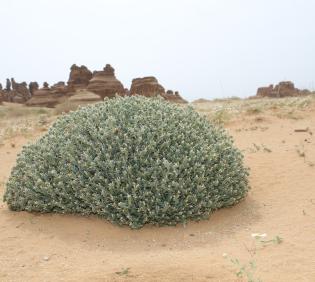
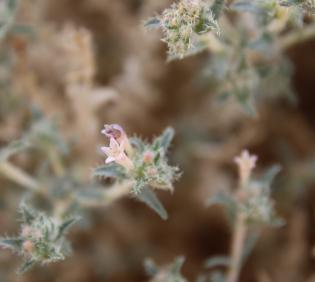
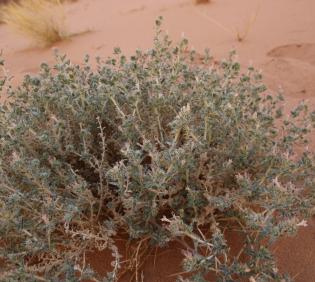
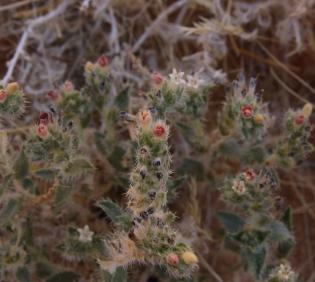
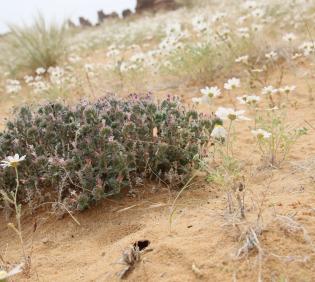
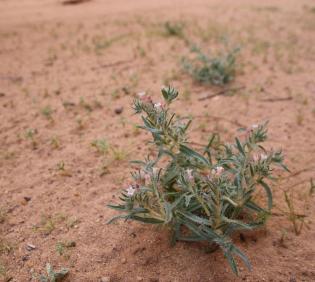
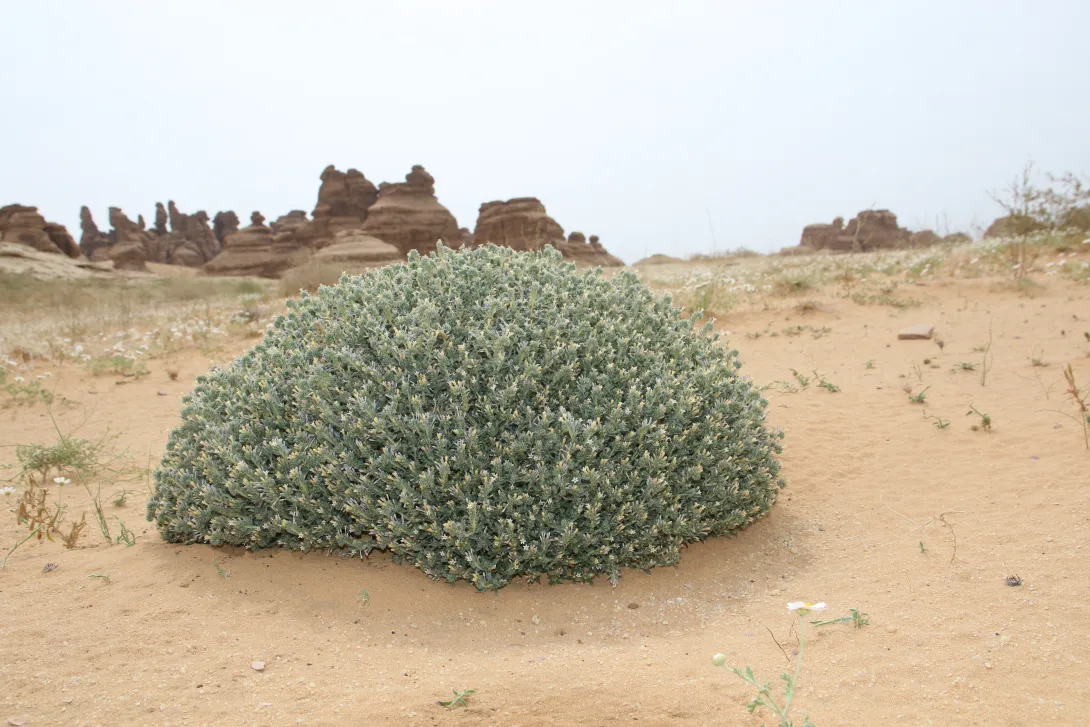
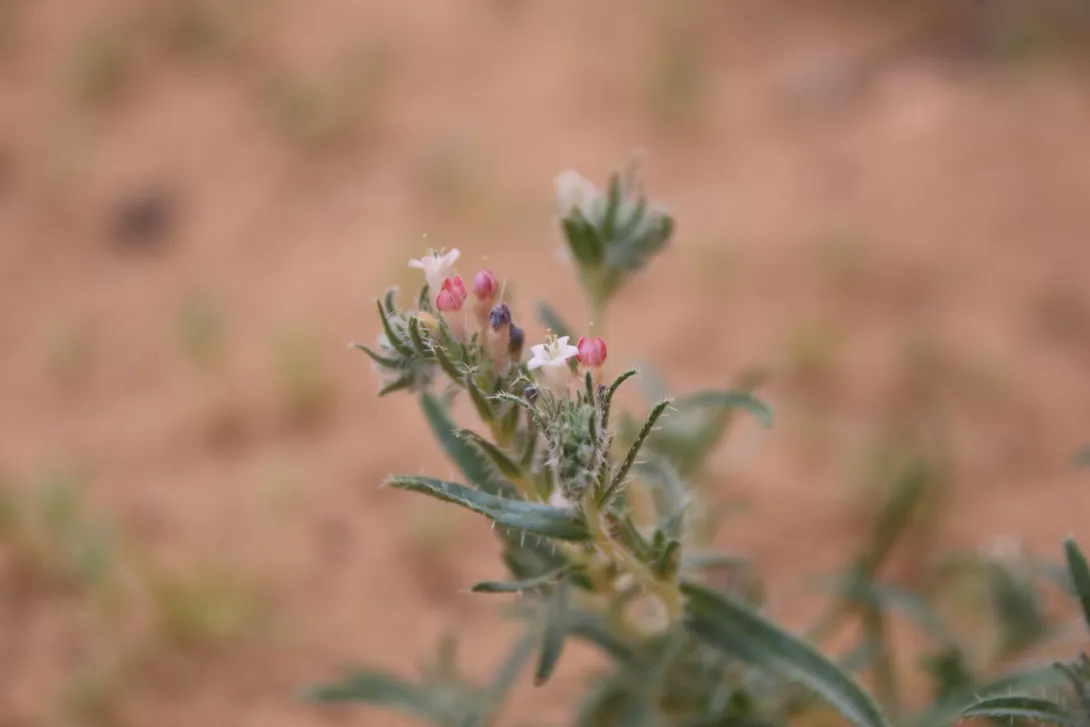
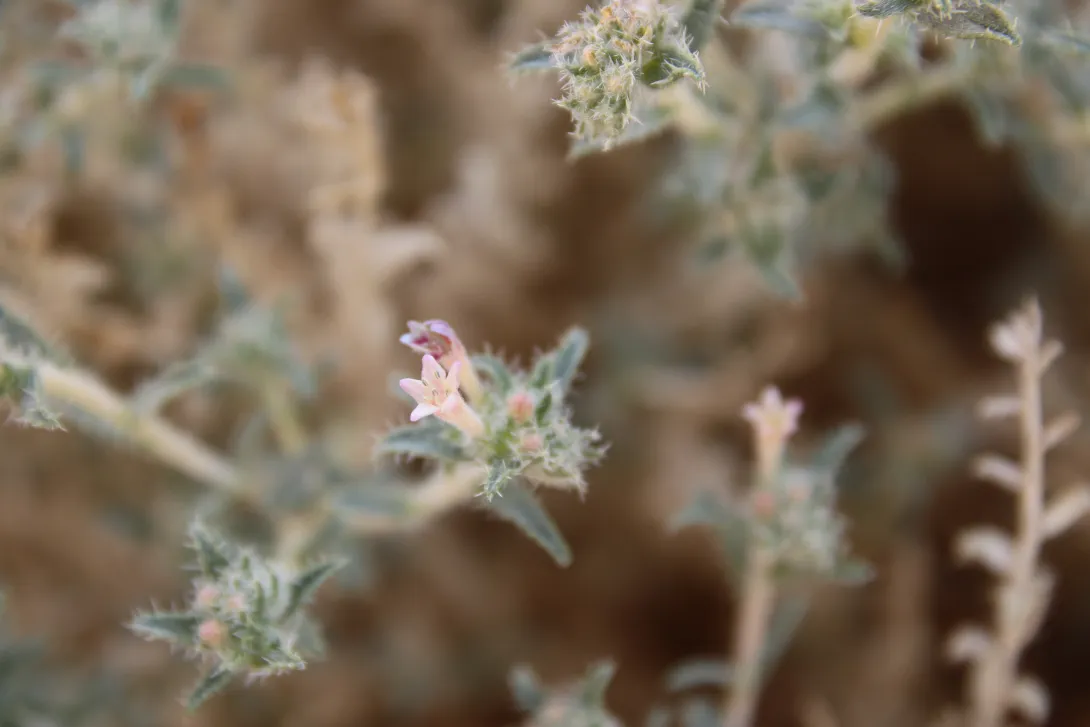
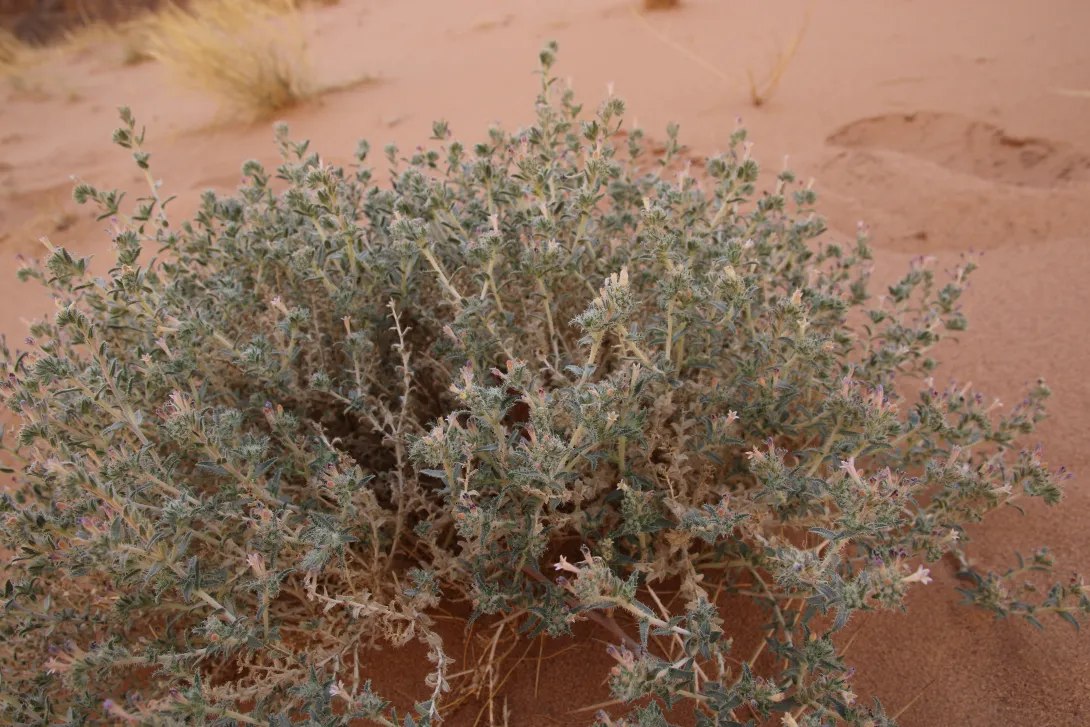
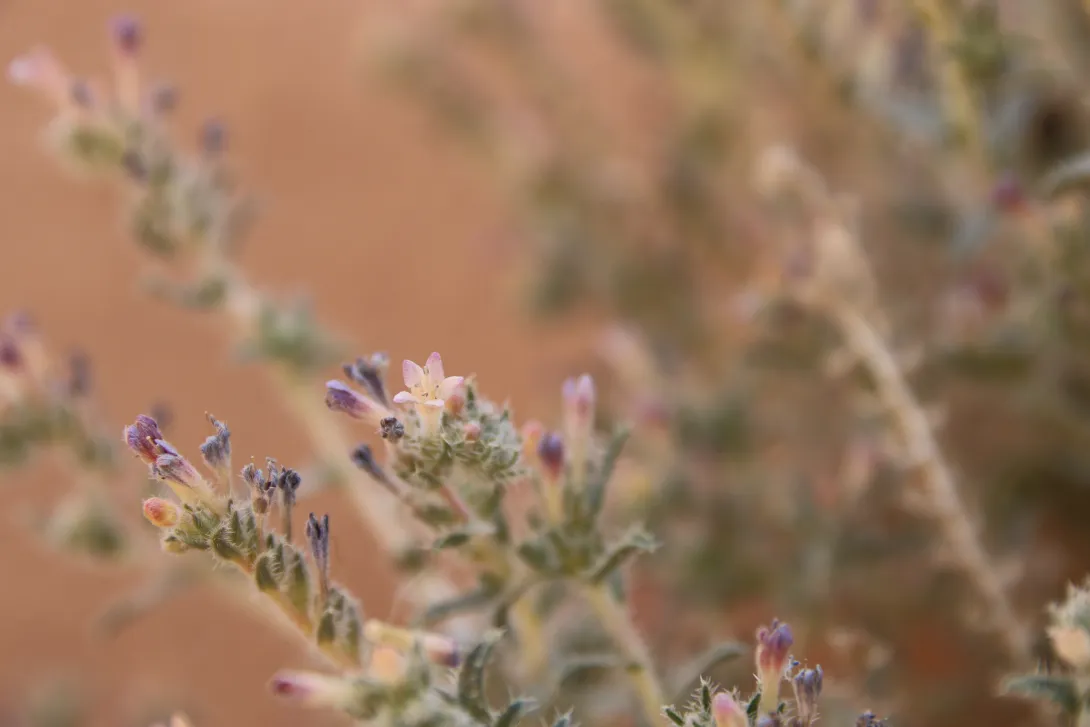
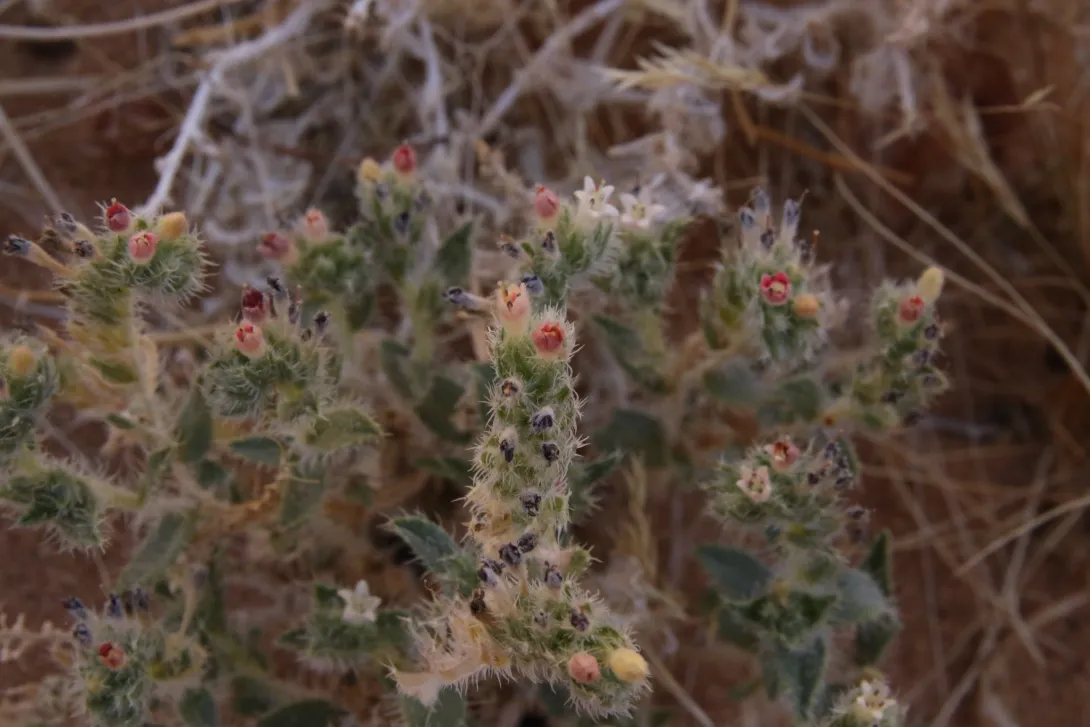
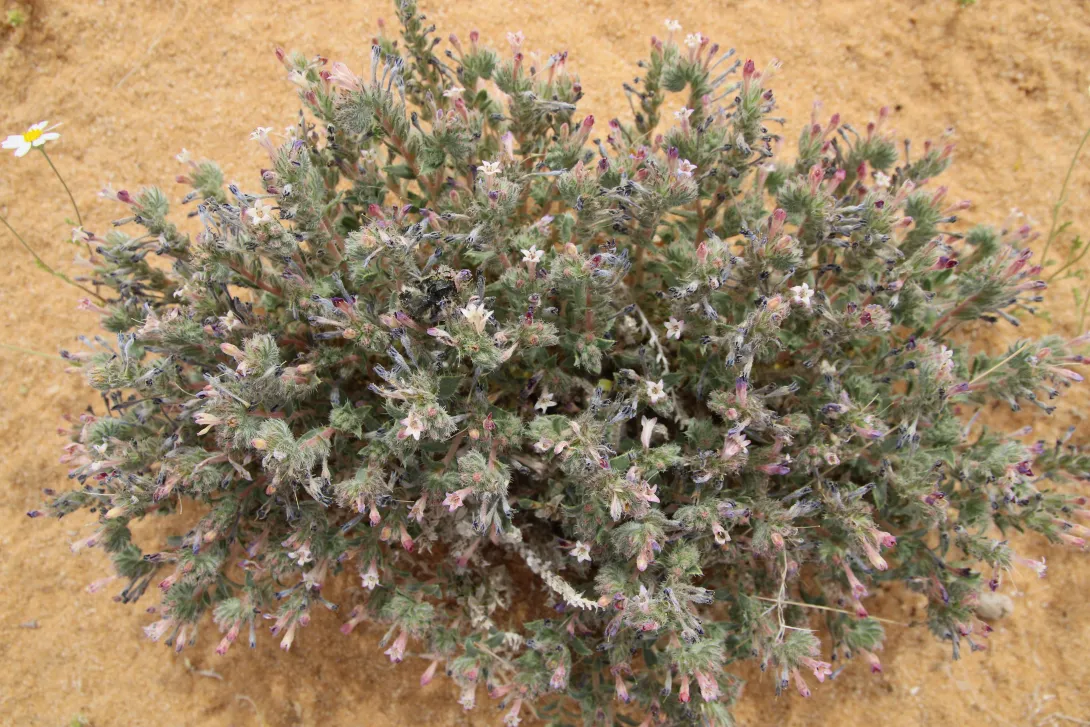
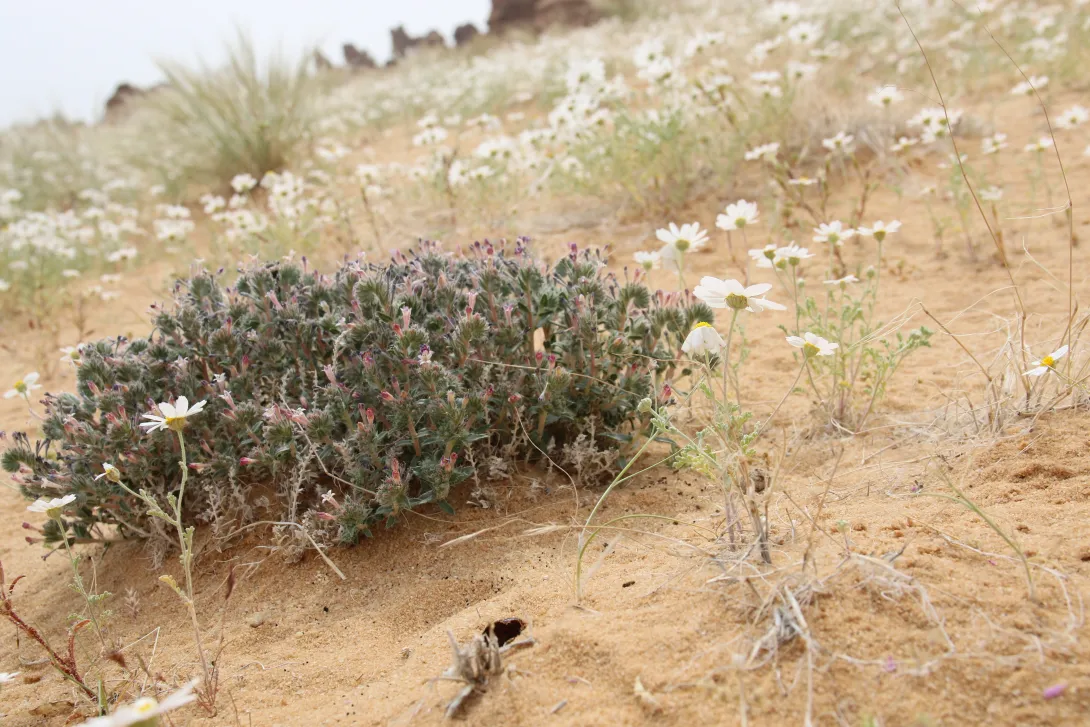
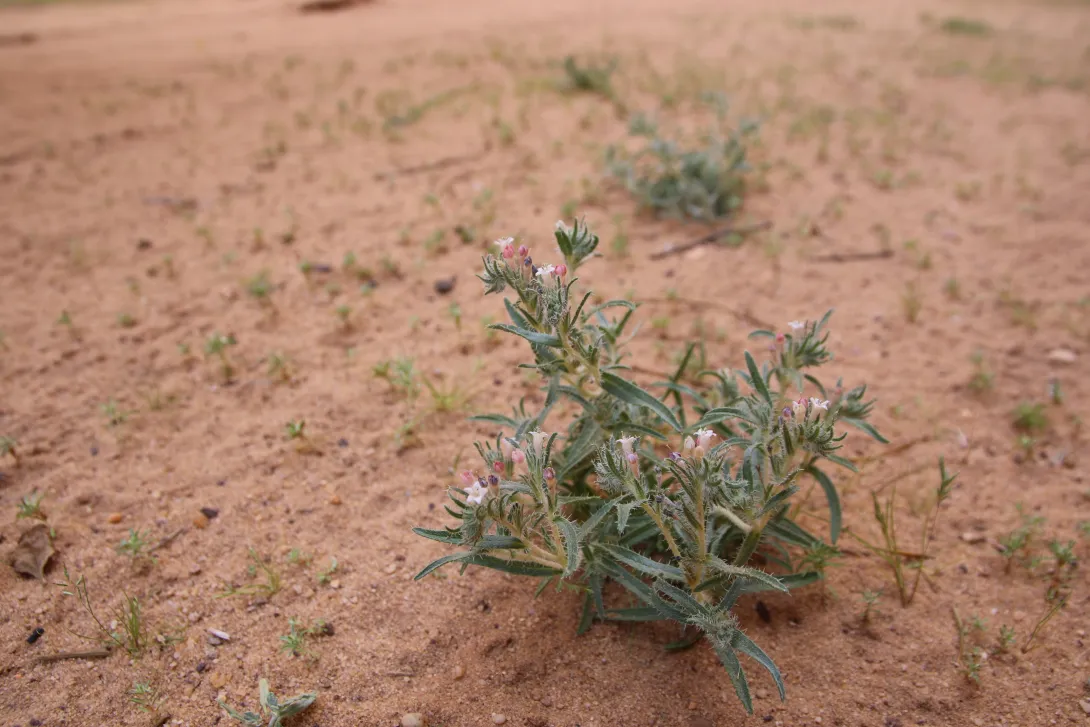
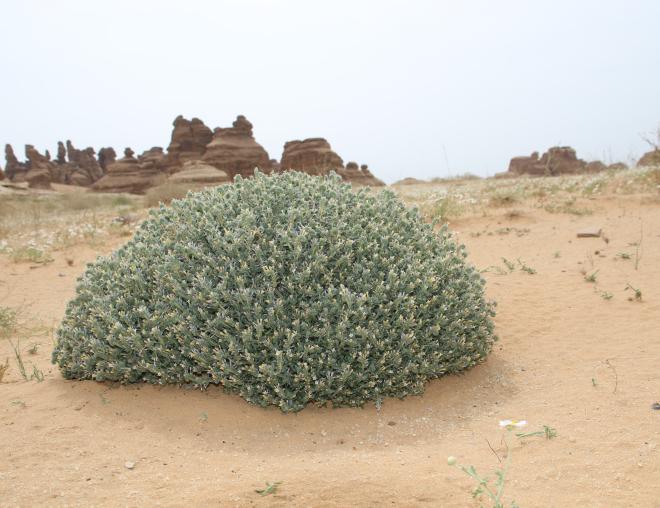
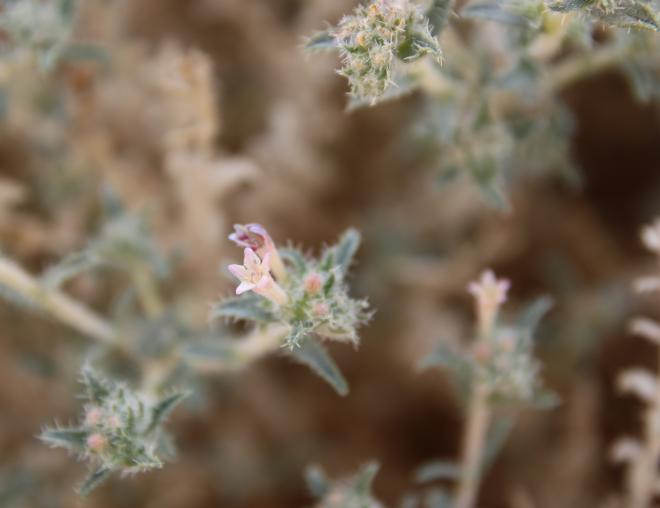
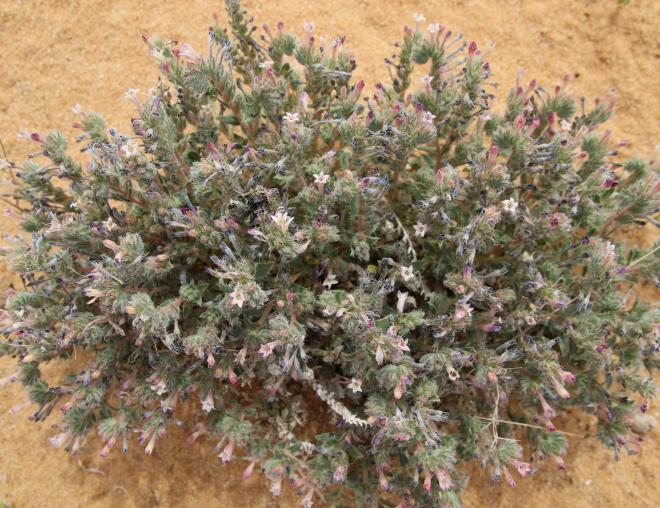
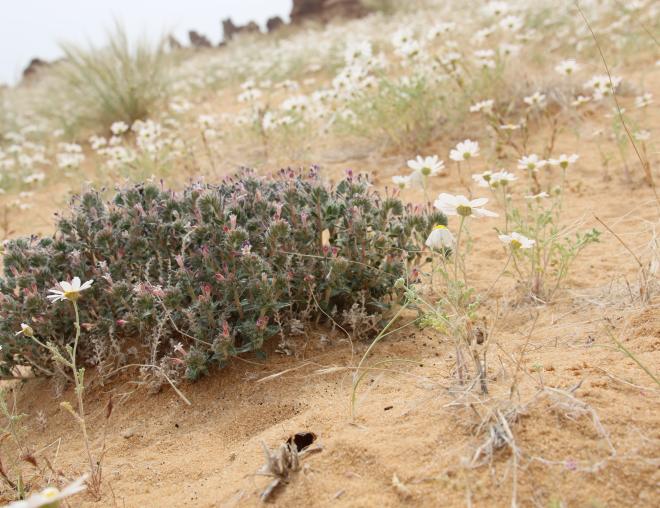
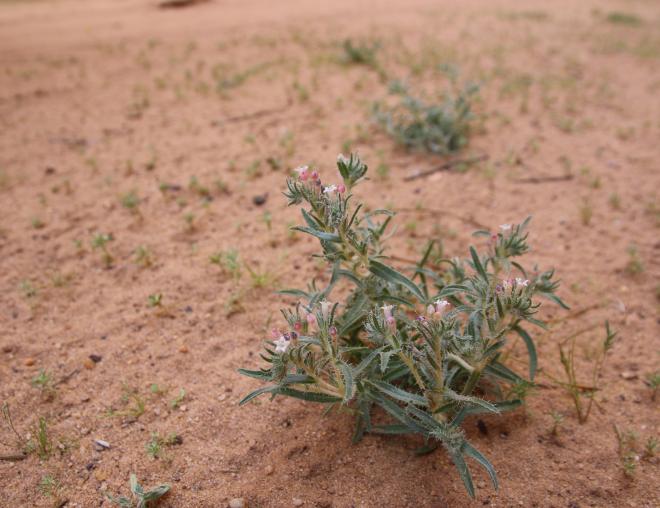
Dwarf hirsute shrublet, up to 30 cm tall, woody at the base with older stems bearing white bark, typically forming a dense, rounded, ball-shaped habit. The entire plant is covered with appressed pubescence and tubercle-based rigid bristles, often displaying a purplish to pinkish overall hue. Leaves are sessile, oblong-lanceolate (up to 25 × 8 mm), rigid, ciliate along the margins, and acute at the tip. Inflorescence is short, arranged in a spicate cyme. Flowers are tubular, broadening above, externally hairy, sessile, and bracteate, with a hairy nectariferous ring near the base. The corolla, about 10 mm long, varies in color from pale pink to purple, red or blue depending on the flowering and pollination stage, and is glabrous at the throat (corolla-mouth naked). There are five stamens, slightly exserted, with unequal filaments; the style is ± exserted with a stigma that is obscurely two-lobed or subglobose. The fruiting calyx is caducous, with entire lobes divided nearly to the base and linear-lanceolate bracts that are longer than the sepals. The inflorescence becomes somewhat lax in fruit. The fruit consists of four exposed nutlets (or 2–3 by abortion), which are triquetrous, acute, smooth, and glossy—typical of Boraginaceae, where each seed is encased in a hard, stony layer.
- Growth Form
-
Description
-
Habitat and Distribution
- Habitat
-
Geographical Distribution Range
This Saharo-Arabian species is distributed from Sahara to Iran. Within the Arabian Peninsula, it is native to Jordan, Saudi Arabia, Gulf States and Oman.
-
Ecology
-
Phenology
JanFebMarAprMayJunJulAugSepOctNovDecFloweringFructification
- Origin
-
IUCN Red List Category
 Not Evaluated
-
Remarks
Moltkiopsis is a monotypic genus, meaning it includes only a single species, Moltkiopsis ciliata.
-
Phenology
-
Uses and Values
-
Description of Traditional Uses
No specific documented uses were identified in accessible literature.
-
Description of Traditional Uses
Gallery