Asparagus horridus L.
-
Syn. Asparagus stipularis Forssk.
Thorny Asparagus
Asparagaceae
1 / 6
-
Morphological Description
-
Description
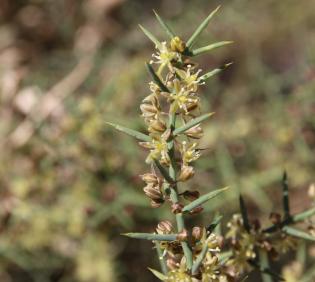
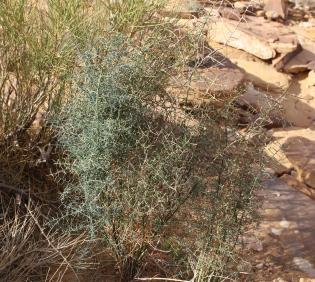
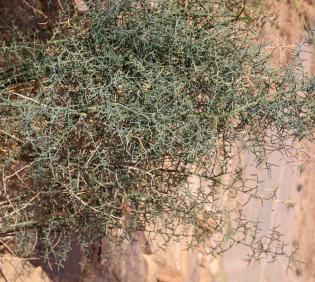
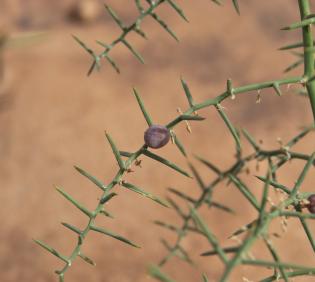
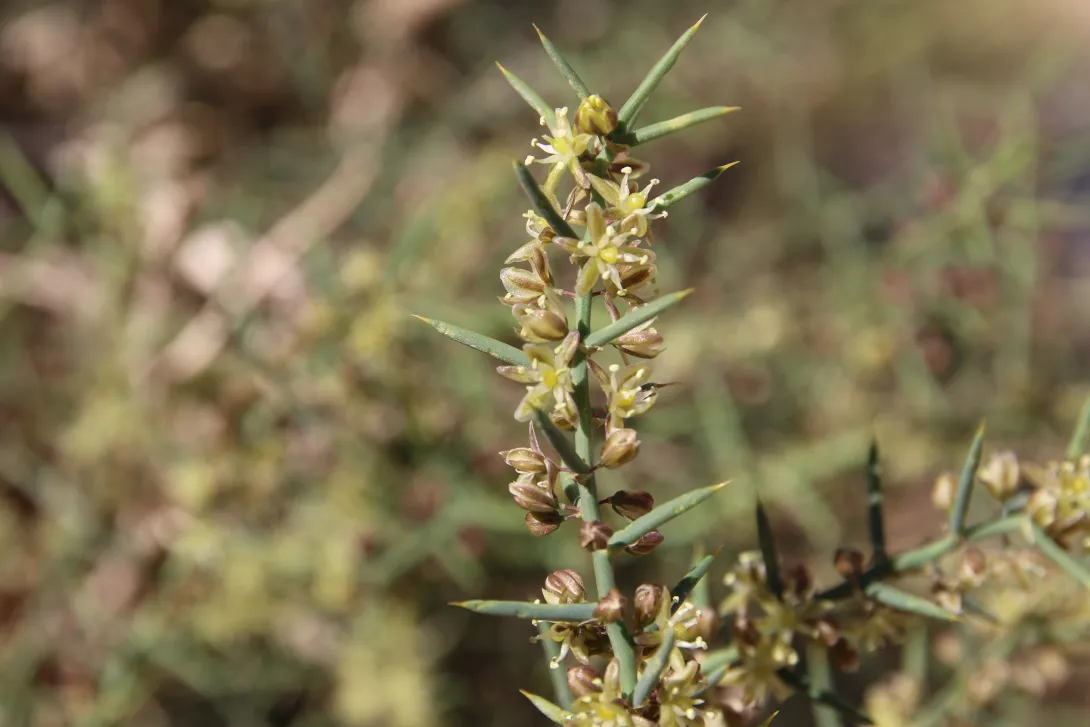
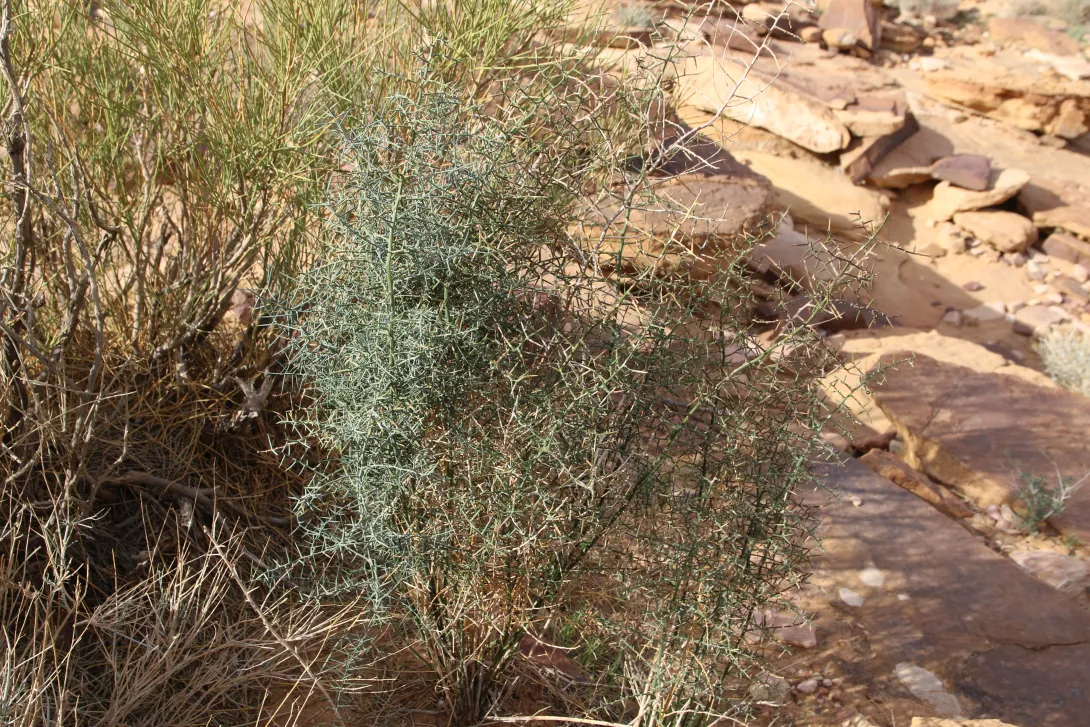
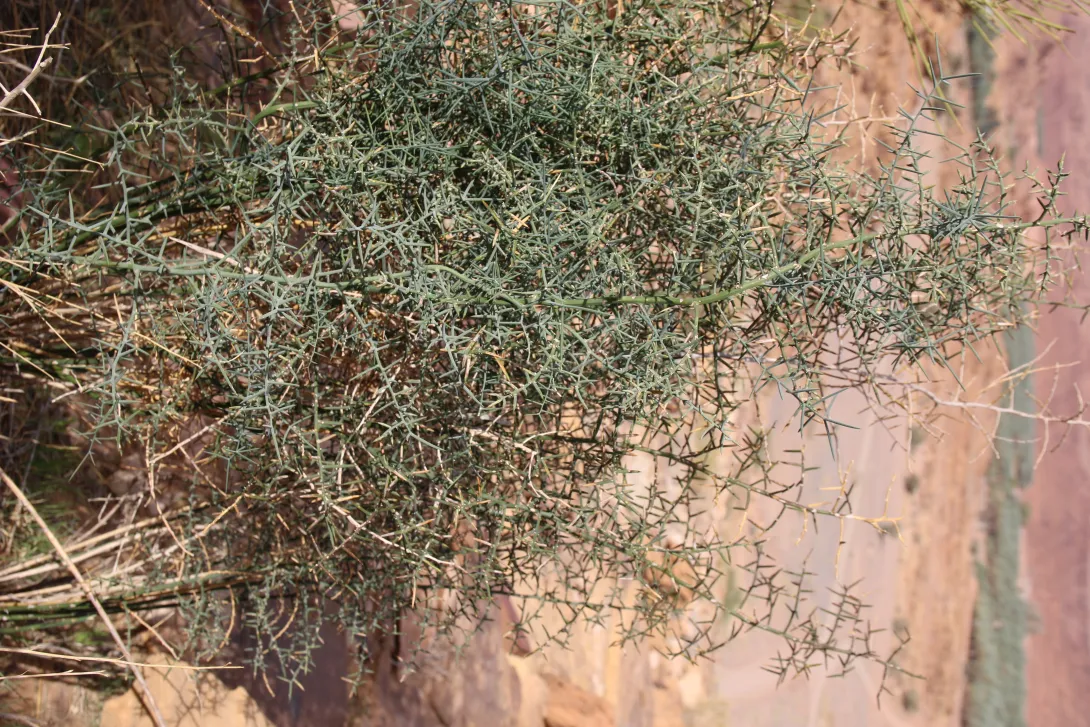
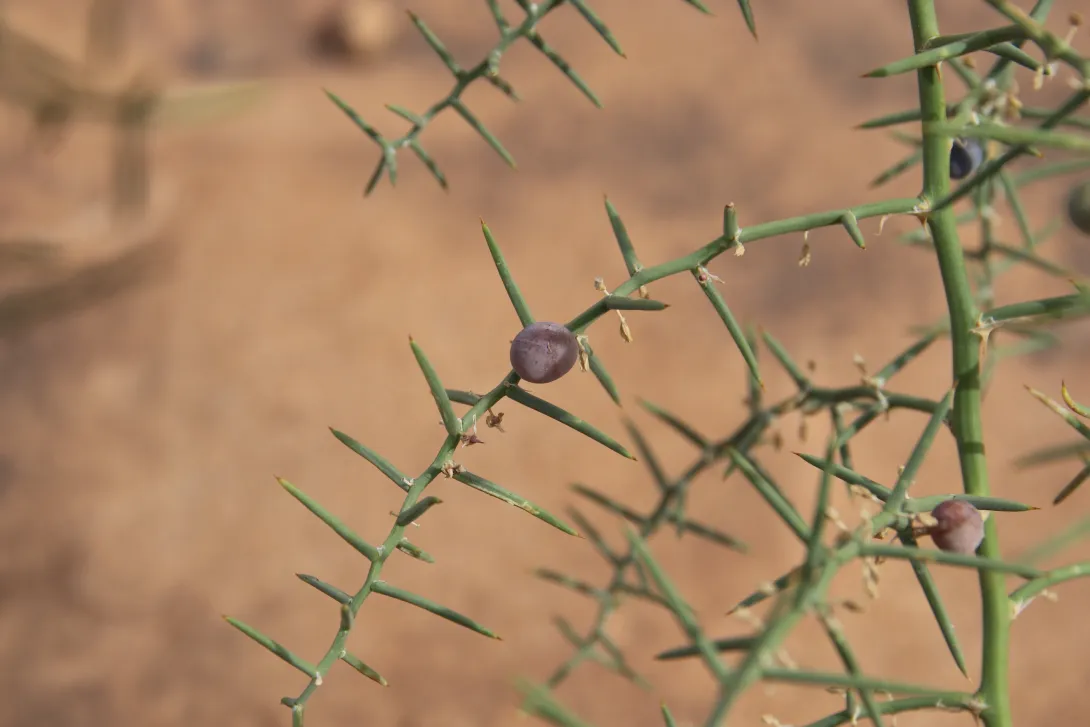
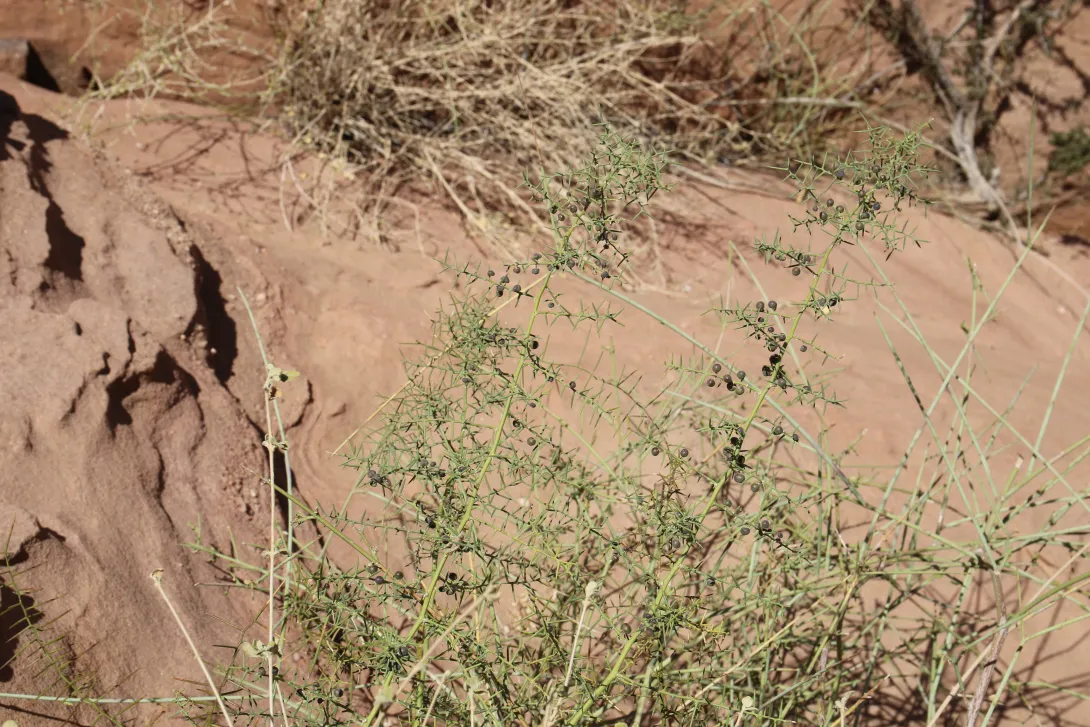
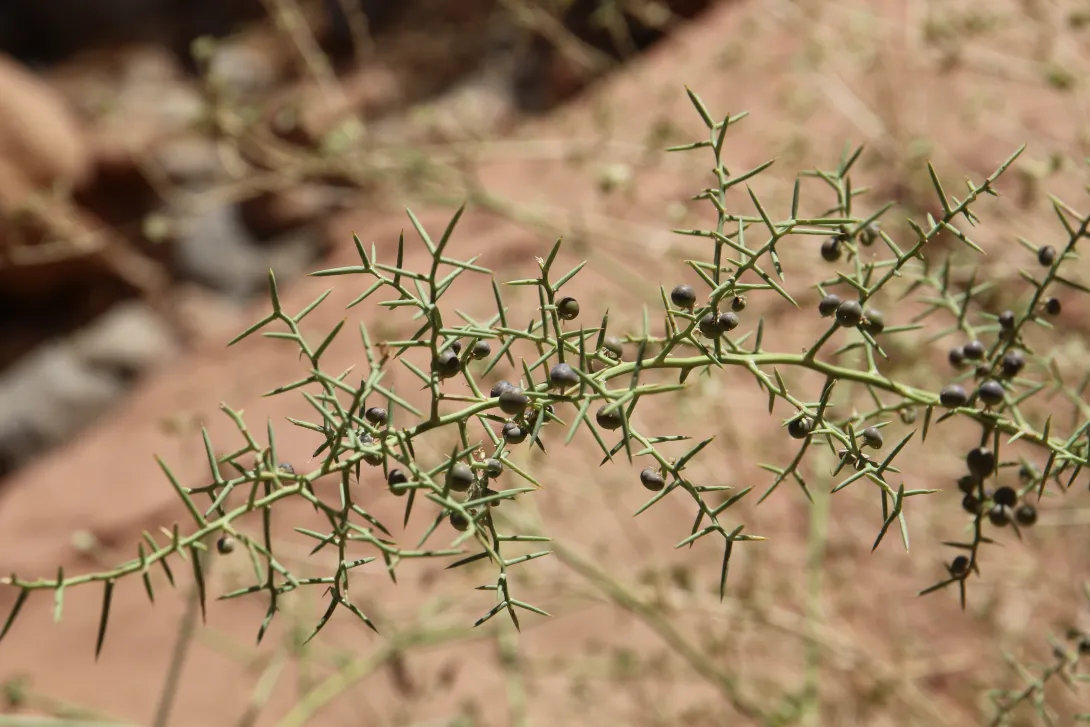
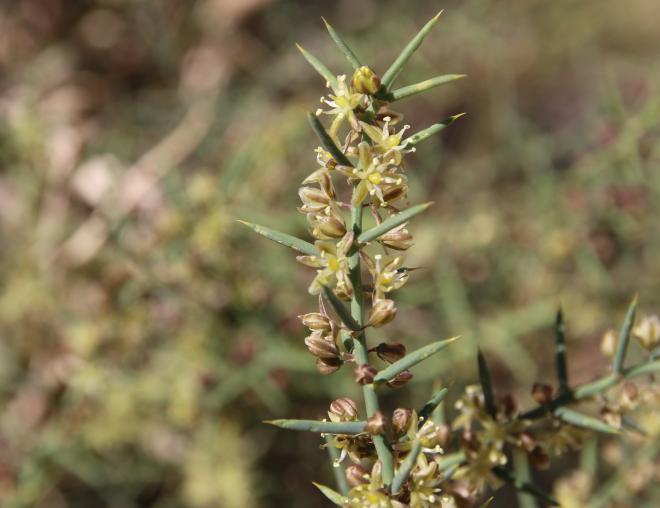
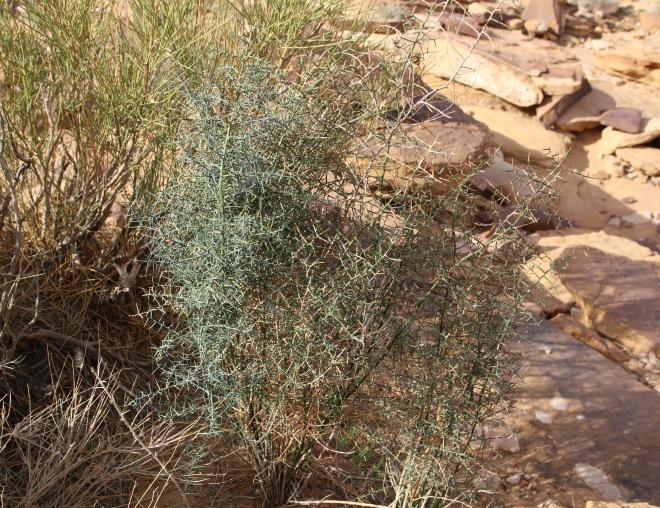
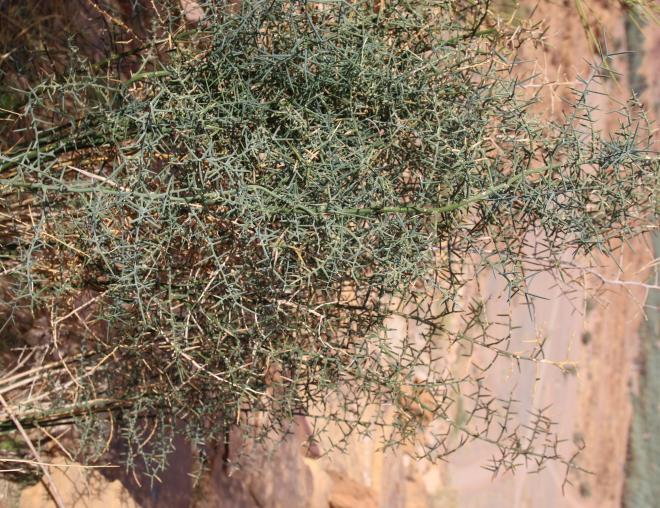
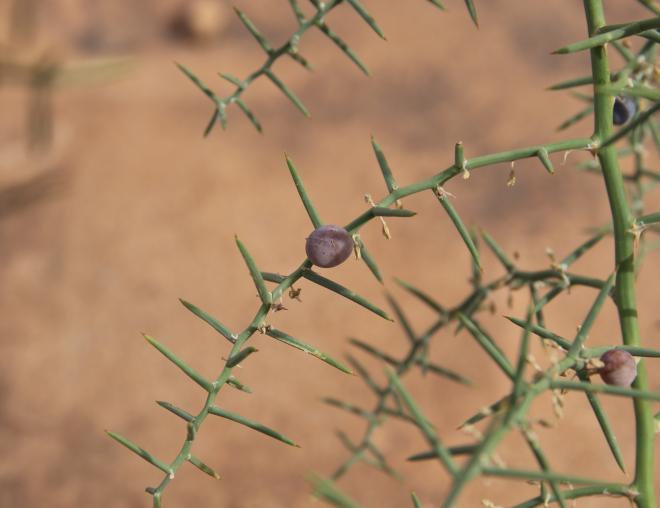
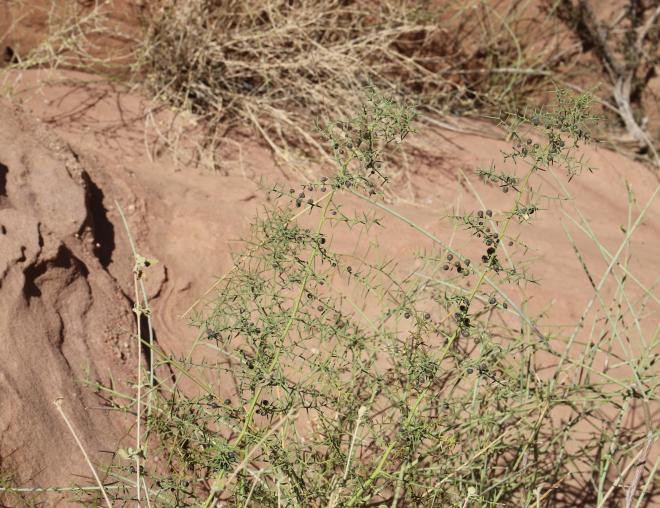
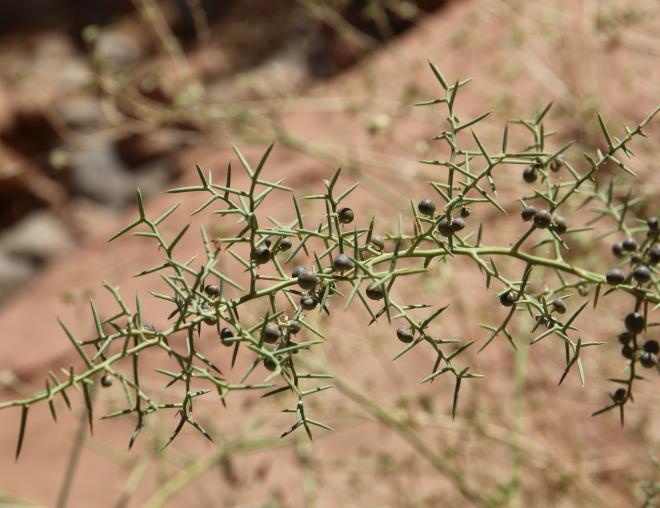
Perennial dense thorny shrublet, intricately branched with ramified stems, up to 1.5 m. Branches rigid, ending in sharp spines. Cladodes numerous, in fascicles of 3–6, filiform, 5–15 mm long. Leaves reduced to scales. Flowers small, female and male separate, solitary or paired, yellowish-white, fragrant. Fruit a globose black berry, numerous on the plant, 5–7 mm, containing 1–3 seeds.
- Growth Form
-
Description
-
Habitat and Distribution
- Habitat
-
Geographical Distribution Range
This Mediterranean Saharo-Arabian species is distributed in all the Mediterranean Bassin to Middle east, from Canaries Islands to Syria. Within the Arabian Peninsula, it is native to Jordan, Saudi Arabia and Gulf States.
-
Ecology
-
Phenology
JanFebMarAprMayJunJulAugSepOctNovDecFloweringFructification
- Origin
-
IUCN Red List Category
 Least Concern
-
Phenology
-
Uses and Values
-
Aromatic and Medicinal Use
Medicinal use
-
Other Usages
Palatable; Edible for birds
-
Description of Traditional Uses
Asparagus horridus is primarily recognized as a wild edible plant. Within traditional medicinal systems, the roots of this species have been documented for use in addressing various discomforts, including the management of pain, rheumatism, and gastrointestinal issues like stomach pain. The fruits are also known to be consumed by birds.
-
Aromatic and Medicinal Use
Gallery