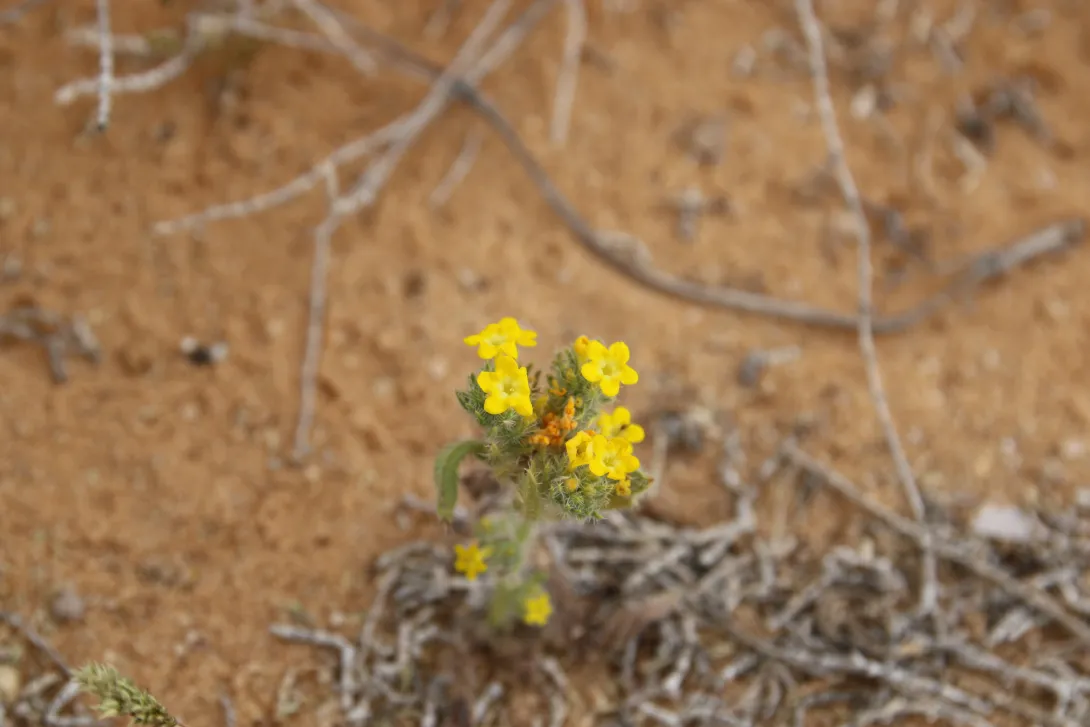
Arnebia hispidissima (Sieber ex Lehm.) A.DC.
الأفاني
Syn. Lithospermum hispidissimum Sieber ex Lehm.
Arabian Primrose, Spiny Bugloss
Boraginaceae
1 / 5

-
Morphological Description
-
Description
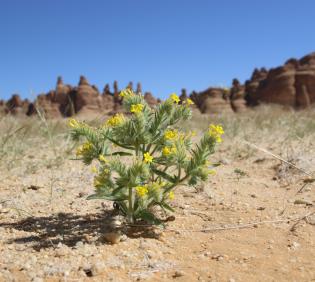
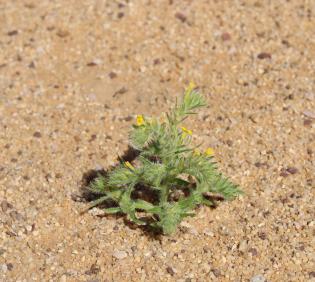
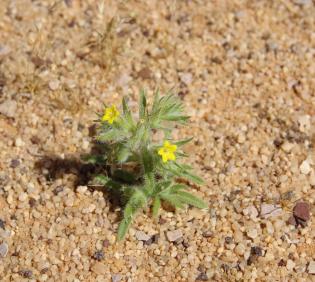
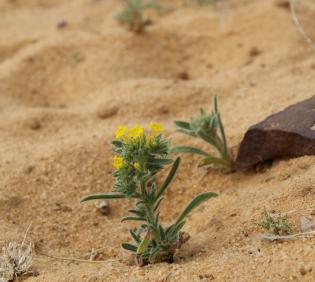
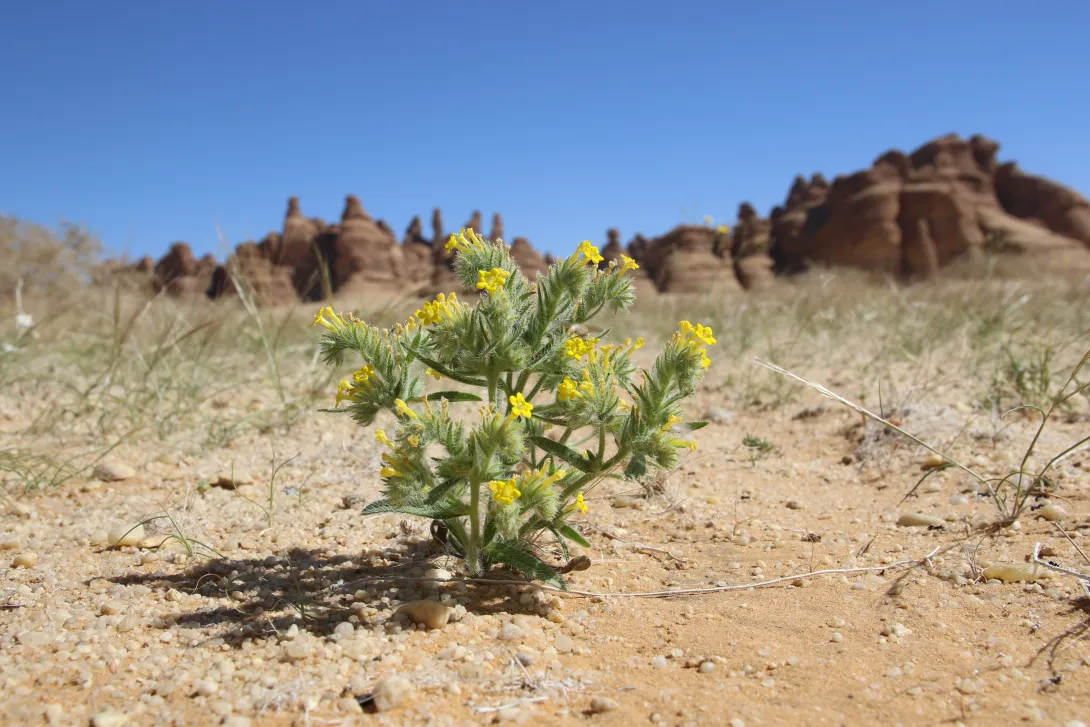
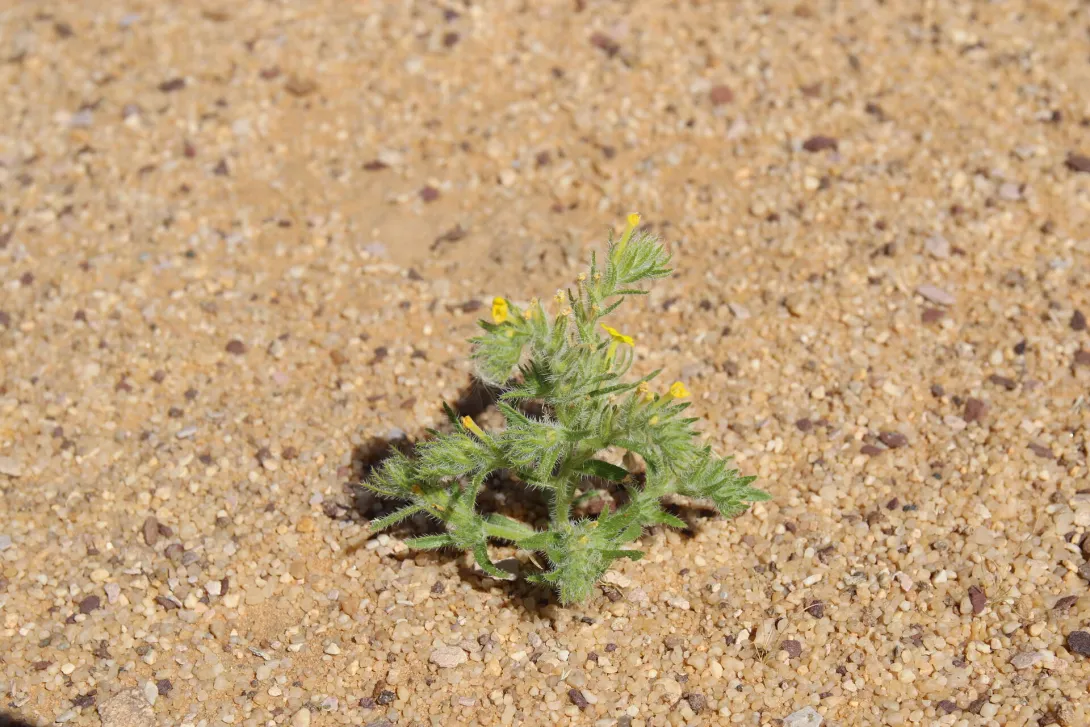
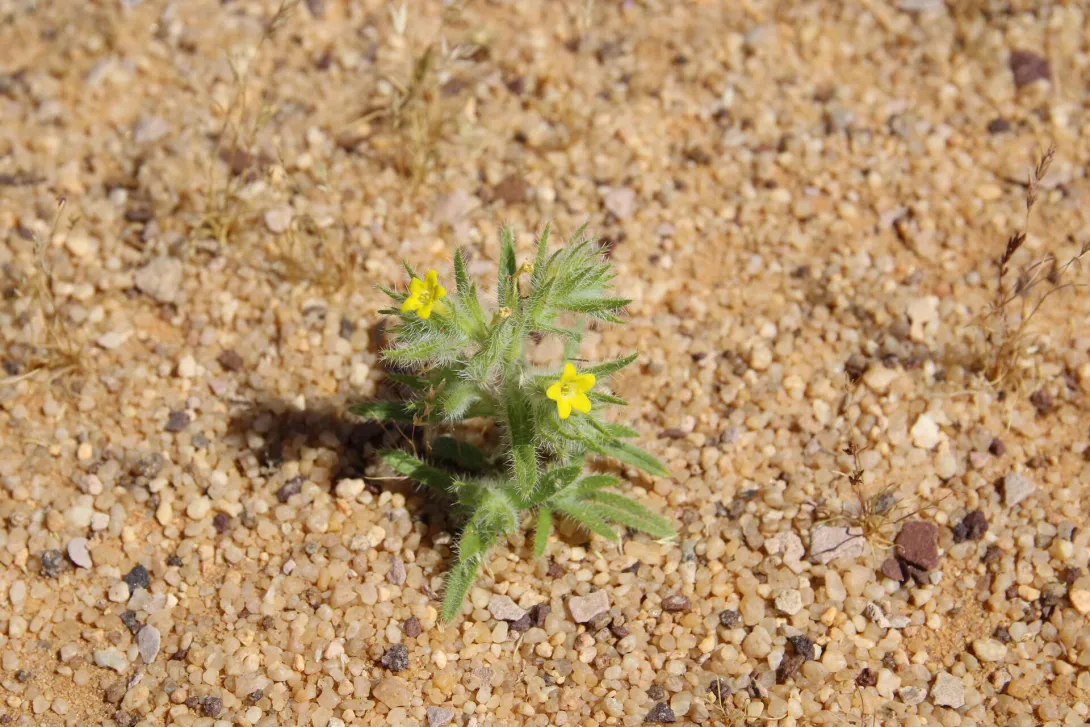
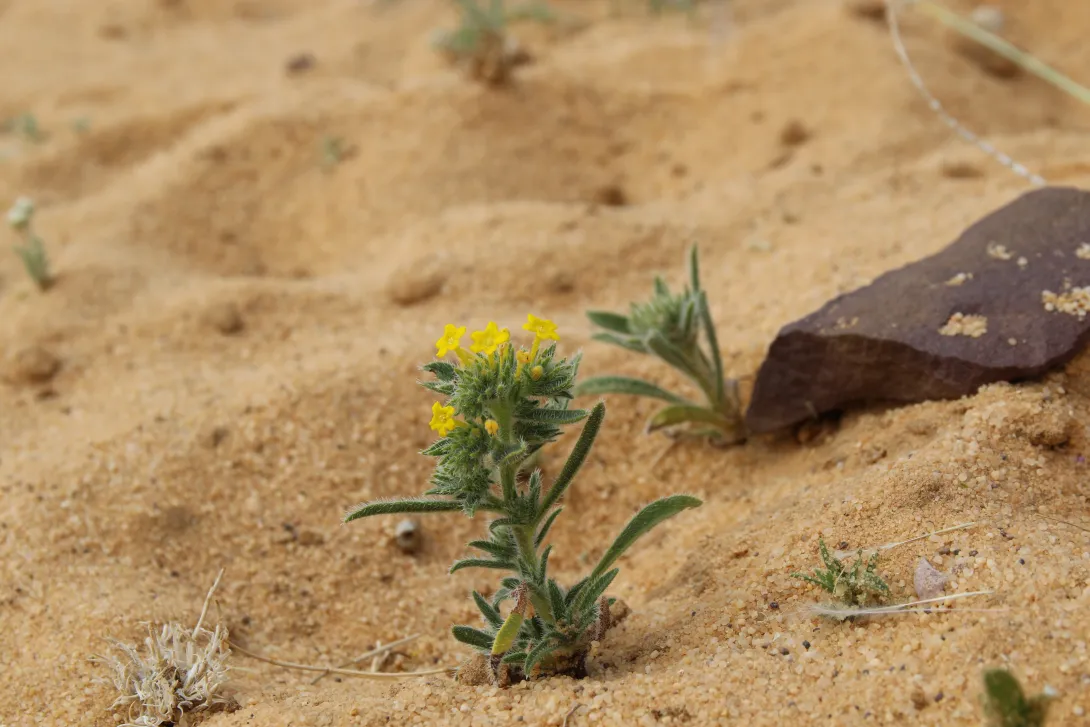
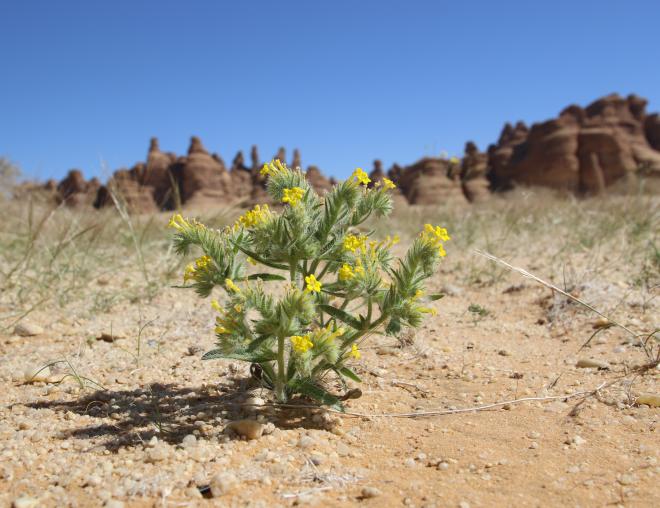
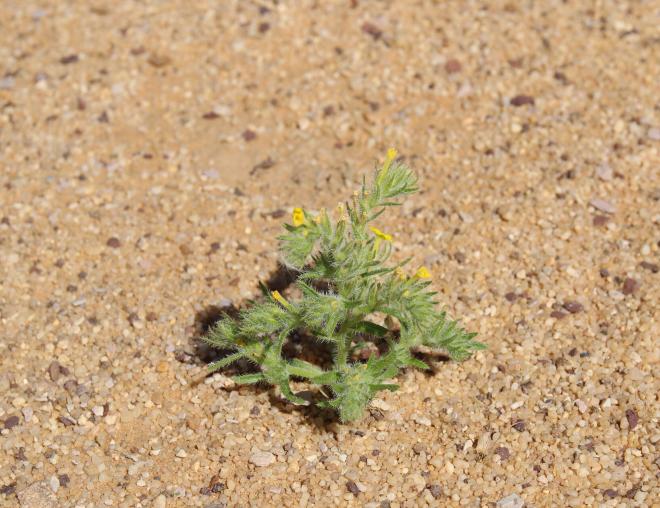
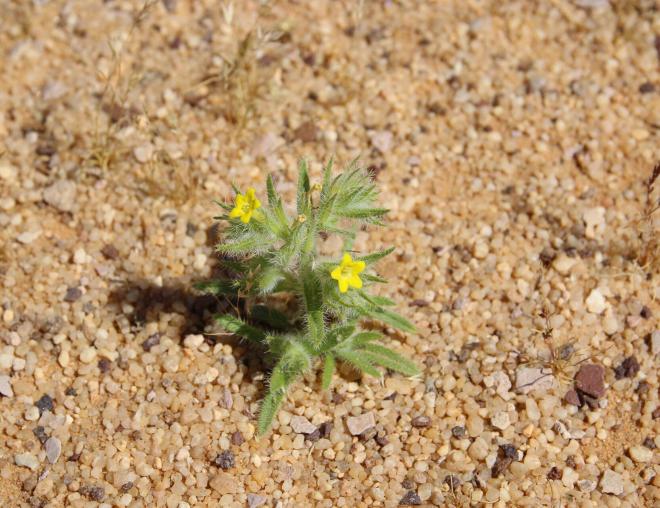
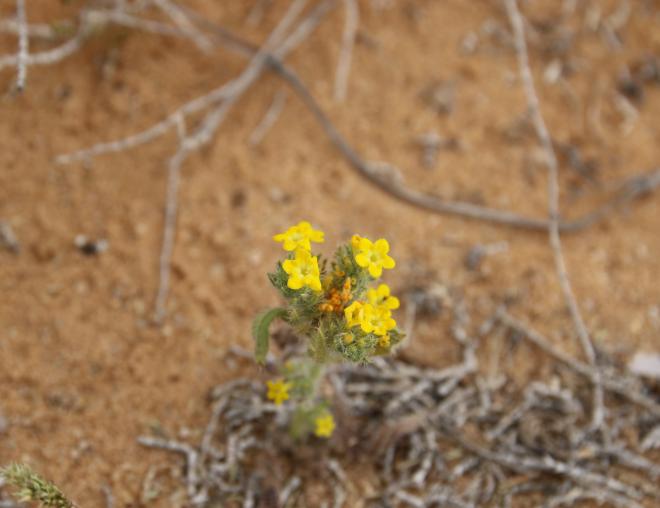
Annual herb up to 40 cm, erect or spreading, stems densely hispid with rigid bristly hairs. Leaves linear to lanceolate, rough, alternate. Flowers in scorpioid cymes; corolla bright yellow with five purple-black blotches at the base, fading with age. Calyx divided almost to base, lobes linear-lanceolate. Nutlets rugose, gray to black.
- Growth Form
-
Description
-
Habitat and Distribution
- Habitat
-
Geographical Distribution Range
This Saharo-Arabian and Sudanian species is is distributed in Africa, Middle East and South-West Asia, from Nigeria to Himalaya. Within the Arabian Peninsula, it is native to Jordan, Saudi Arabia, Gulf States, Oman, Yemen, and Socotra.
-
Ecology
-
Phenology
JanFebMarAprMayJunJulAugSepOctNovDecFloweringFructification
- Origin
-
IUCN Red List Category
 Not Evaluated
-
Remarks
Small ephemeral speecies ccommon in all AlUla County.
-
Phenology
-
Uses and Values
-
Aromatic and Medicinal Use
Medicinal use
-
Other Usages
Melliferous
-
Description of Traditional Uses
Arnebia hispidissima has a documented history of traditional use. The roots are utilized as a natural dye and in traditional medicine to treat ulcers, boils, cuts, throat ailments, heart problems, and headaches. Preparations made from the roots, such as tea, are traditionally employed to address asthma, coughs, and chest complaints. Furthermore, the whole plant has been traditionally used to manage fevers (including malarial fever) and epilepsy.
-
Aromatic and Medicinal Use
Gallery