Withania somnifera (L.) Dunal
سم الفار / العُبَب
Syn. Physalis somnifera L. (1753)
Winter Cherry, Indian Ginseng
Solanaceae
1 / 7

-
Morphological Description
-
Description
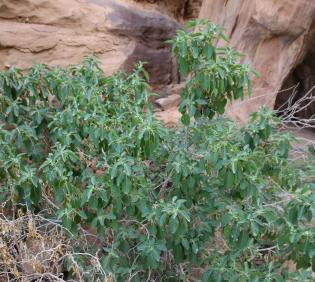
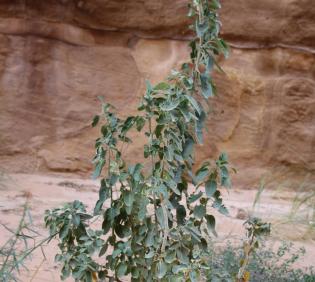
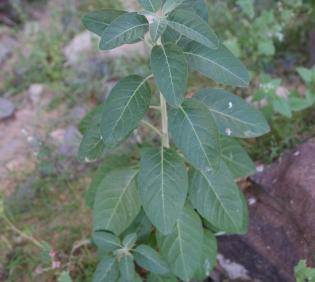
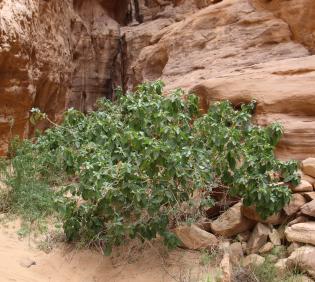
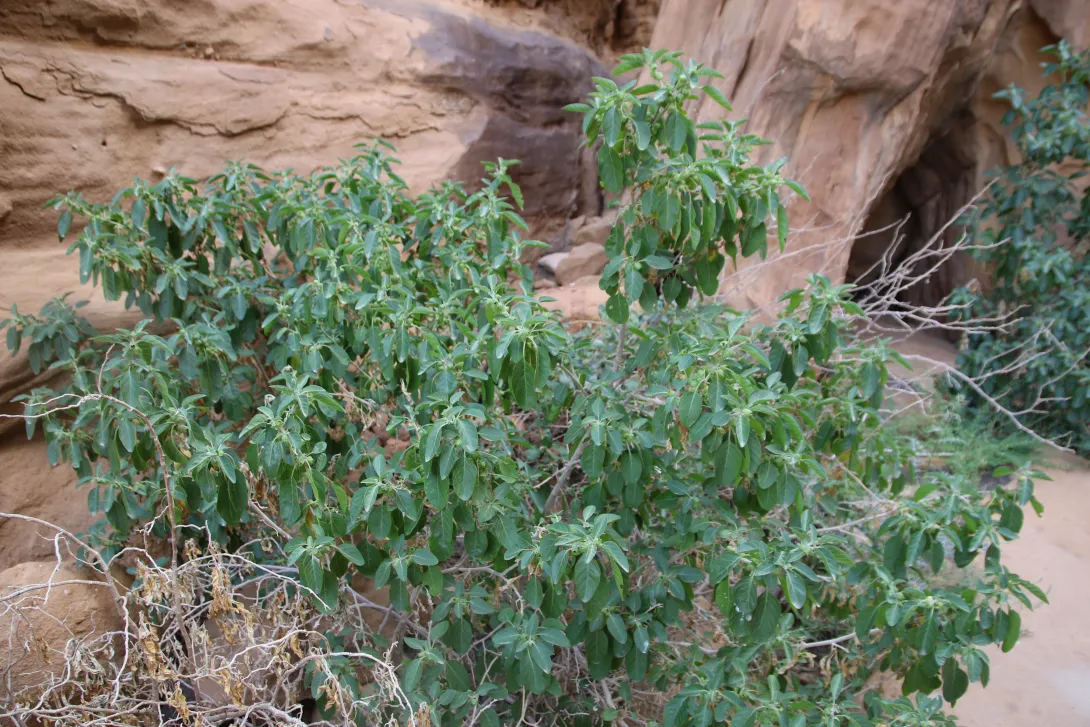
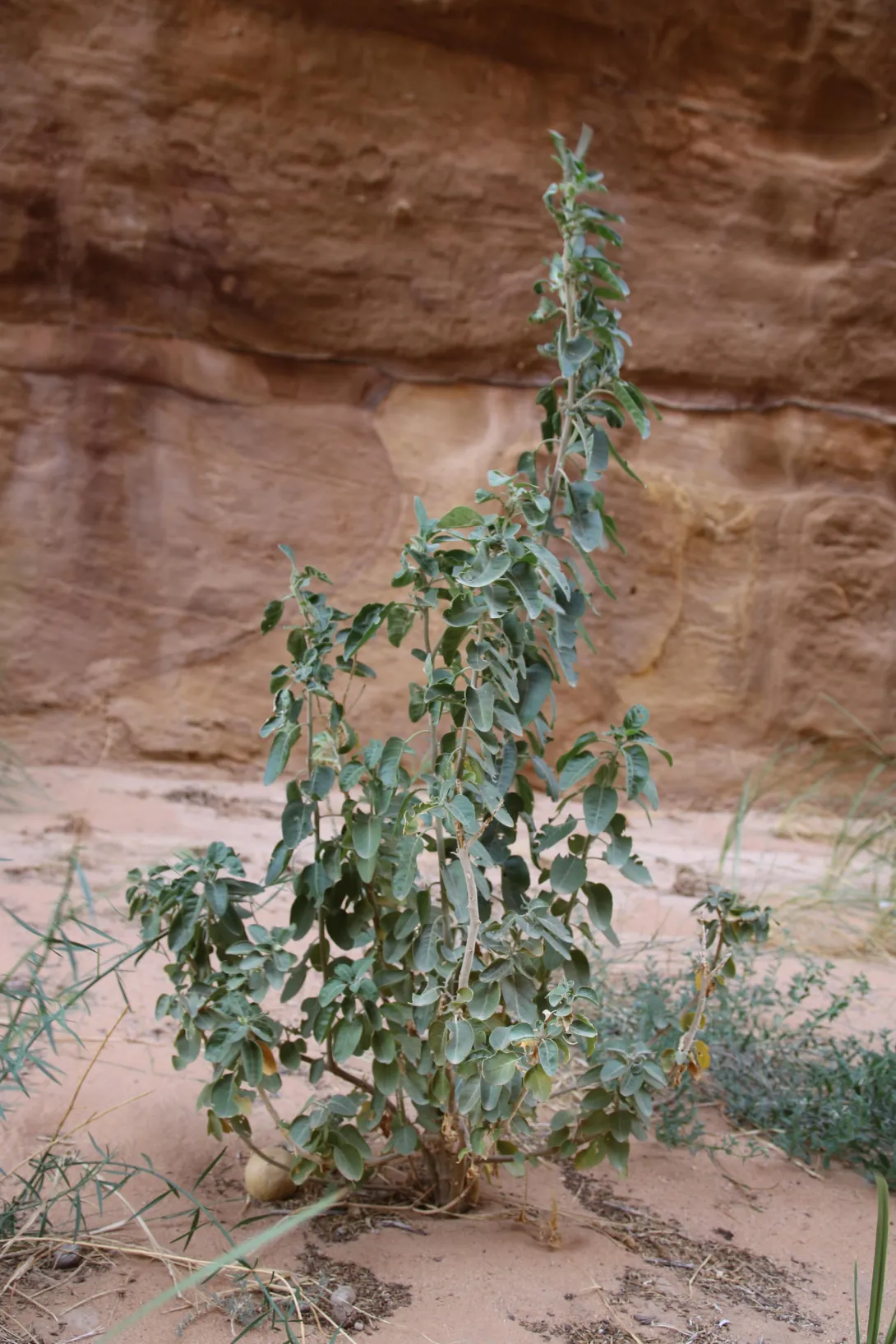
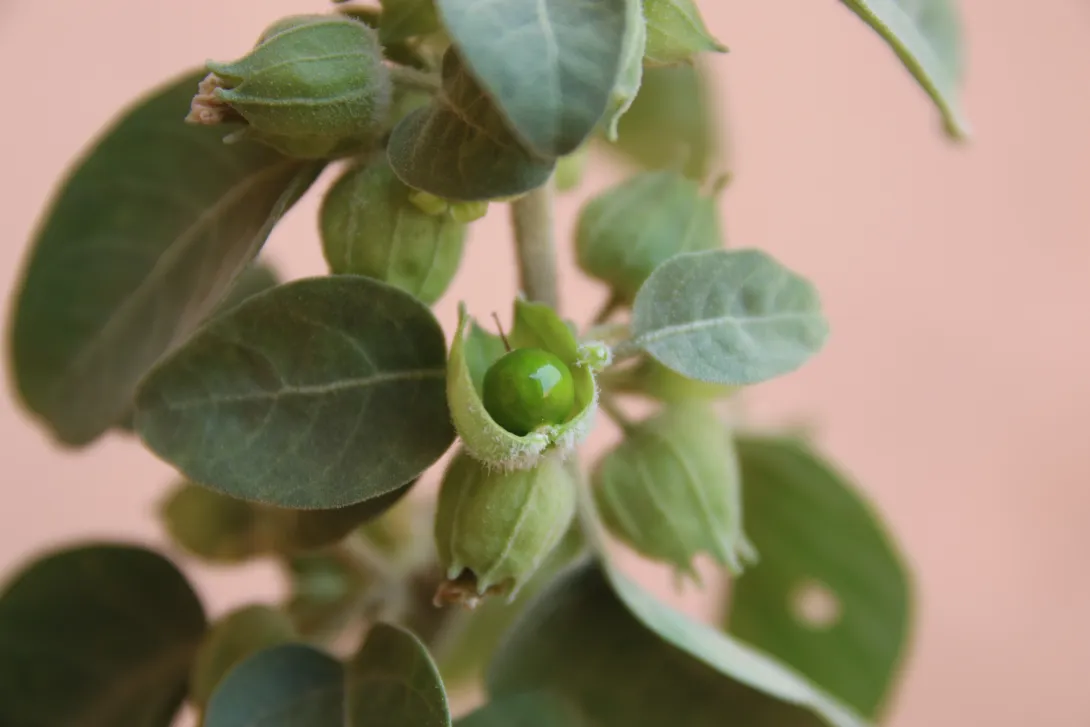
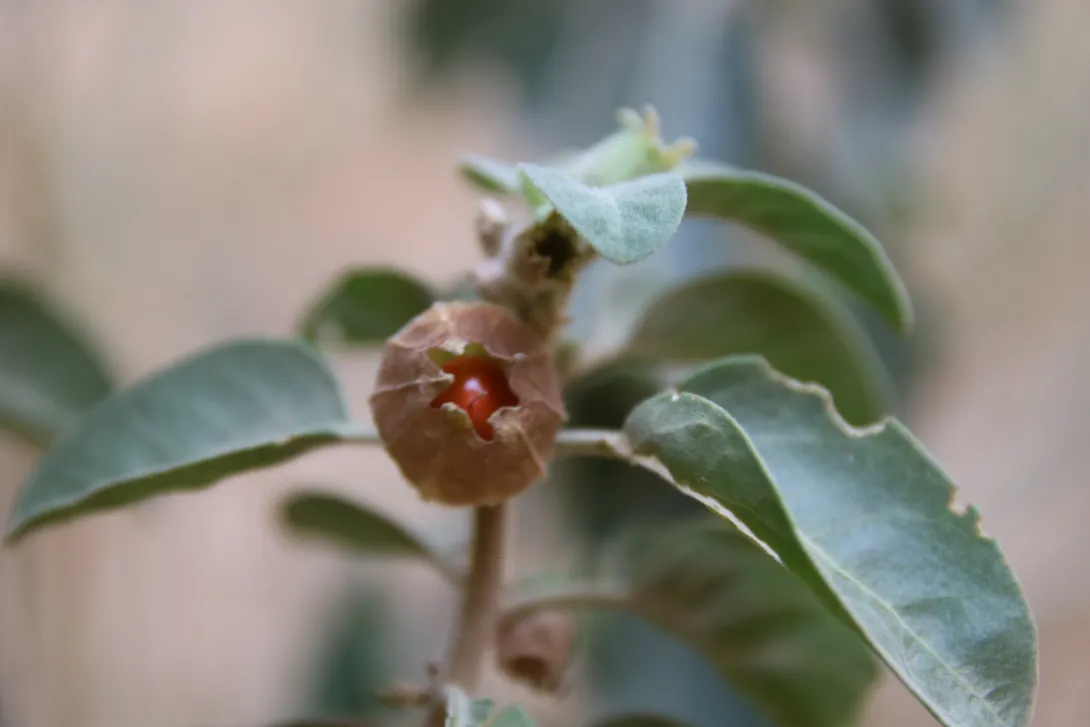
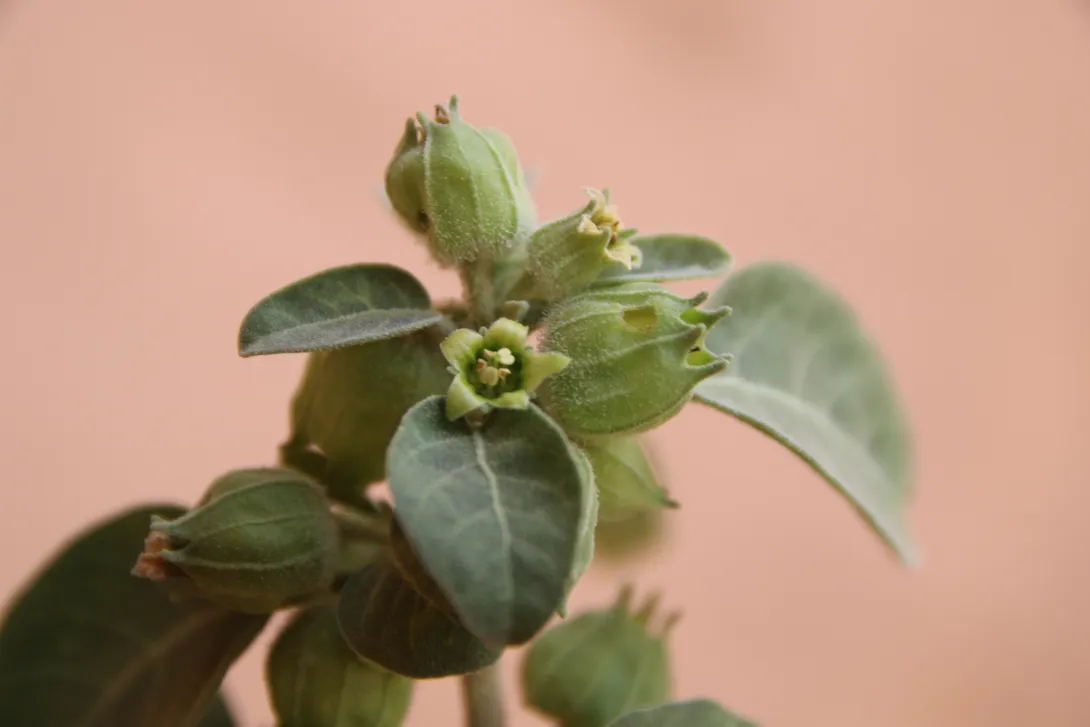
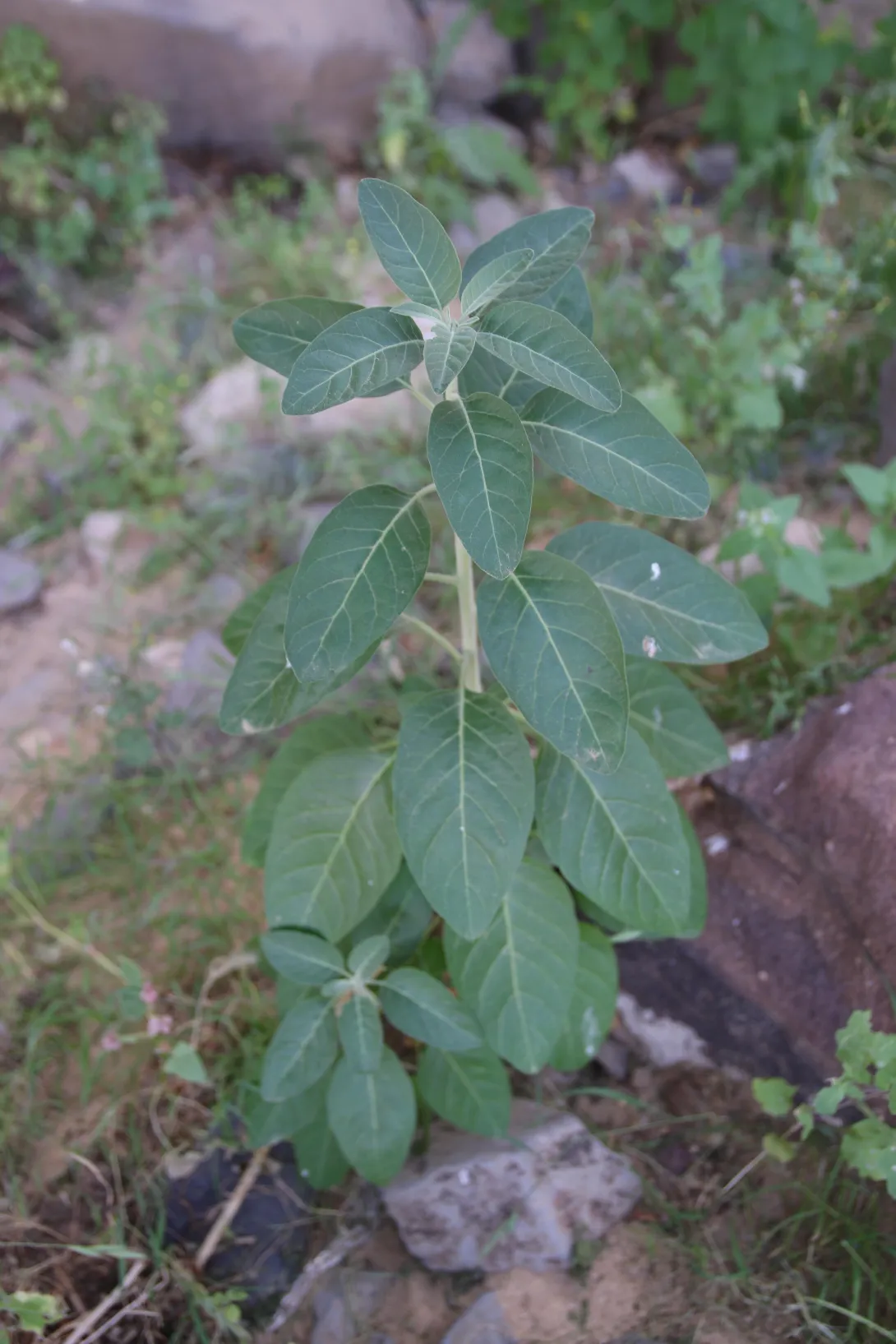
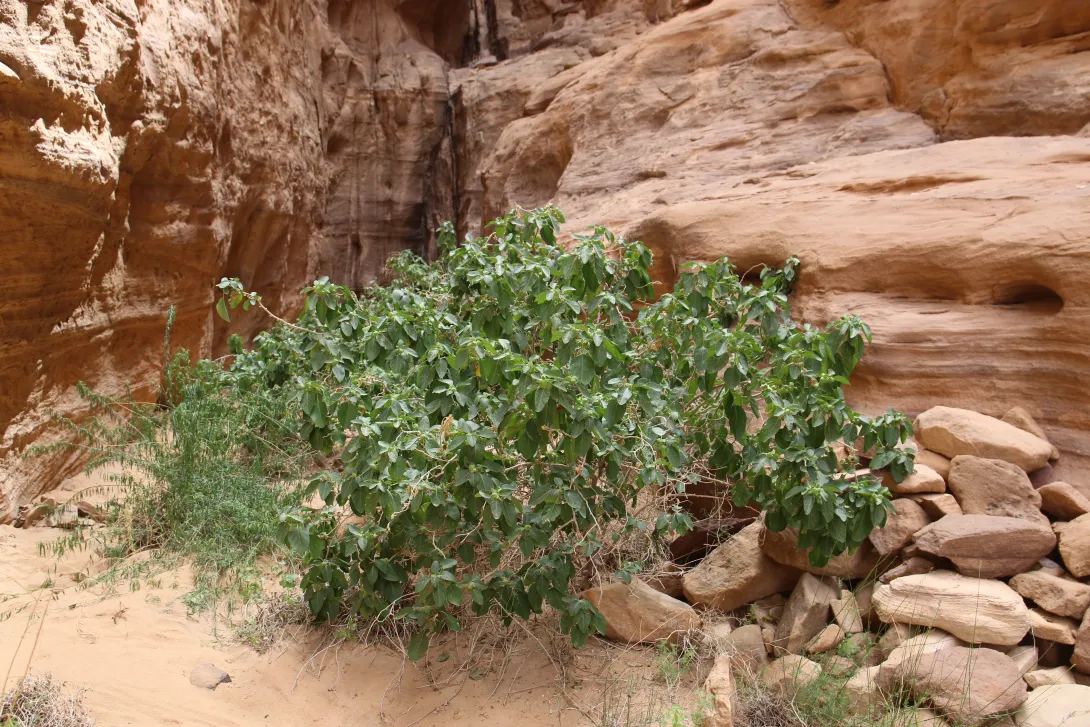
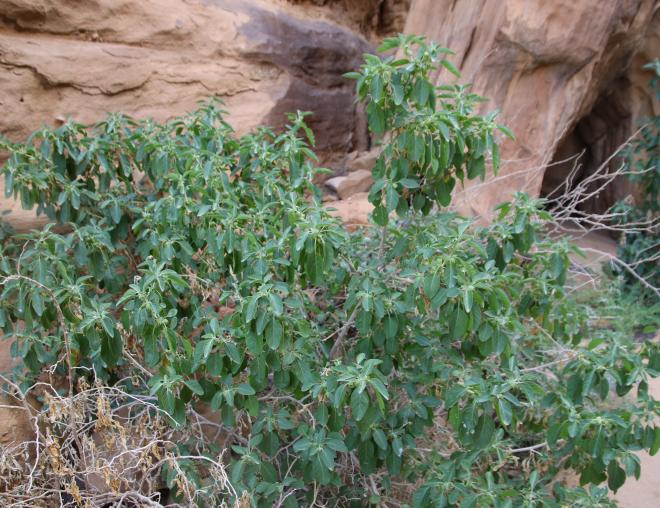
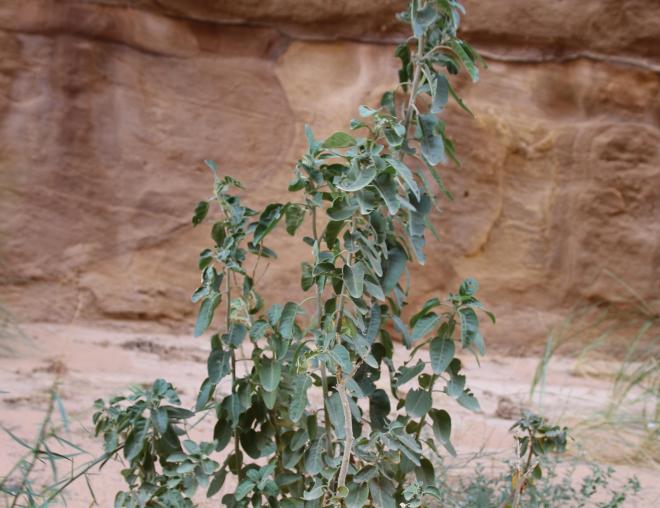
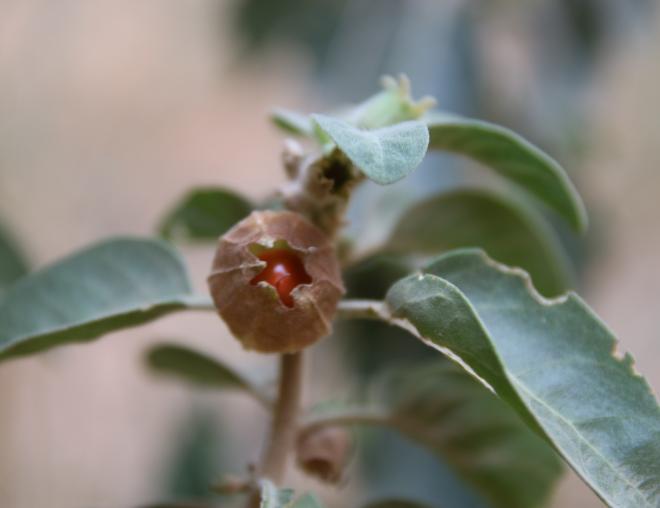
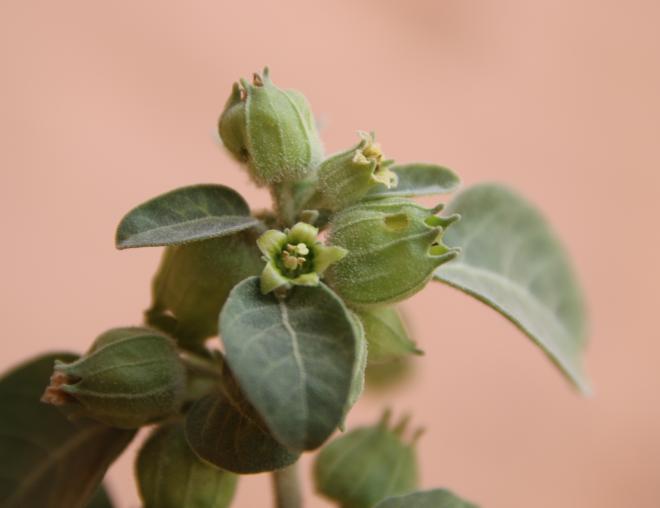
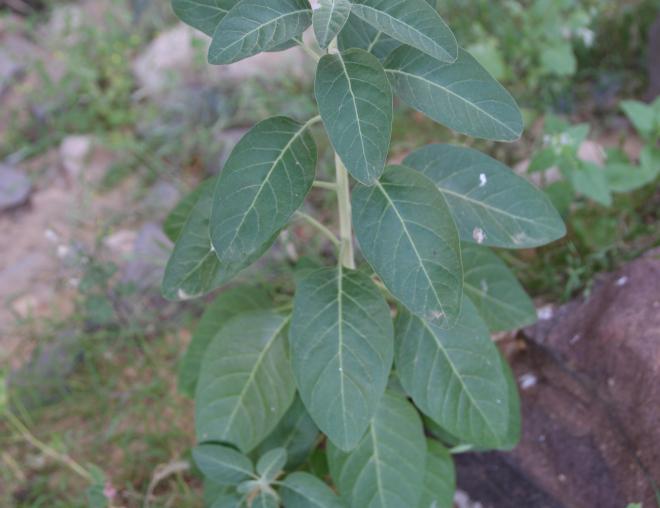
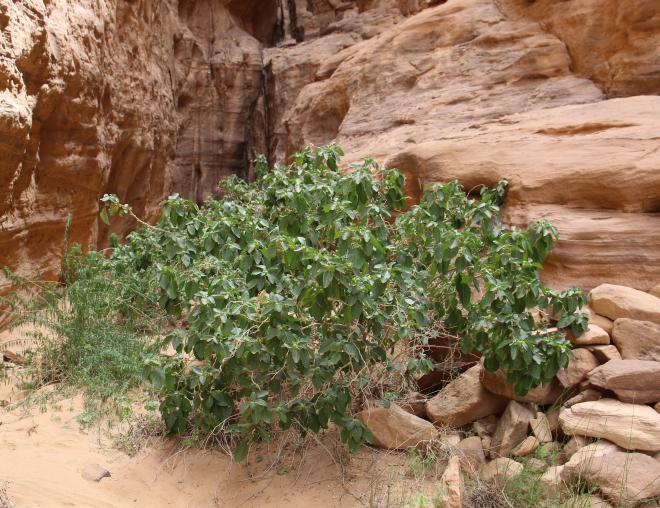
Shrub, 0.5-1.5 m tall. All parts densely pubescent with soft, erect, dendritic hairs. Leaves petiolate, ovate to elliptic or lanceolate, entire, acute to obtuse, attenuate to truncate at base, hairy on both surfaces, densely so below, 2-12 x 1-10 cm. Flowers bisexual, pedicellate, solitary or in fascicles of 2-16, congested. Calyx campanulate, densely hairy outside; in fruit membranous, acuminate and enlarging up to 2.2 cm. Corolla yellowish green, 5-8 mm long, campanulate, lobes ovate-triangular, hairy outside, margin somewhat clavate-hairy. Stamens small, about 3 mm long. Ovary glabrous; stigma globose. Berry globose, 5-7 mm in diameter, shining red, enclosed by the calyx.
- Growth Form
-
Description
-
Habitat and Distribution
- Habitat
-
Geographical Distribution Range
This Mediterranean and Irano-Turanian species is widely distributed. It occurs throughout southern Europe, Africa, as well as in western South Asia.In the Arabian Peninsula, it is recorded as native to Jordan, Saudi Arabia, Qatar, the Gulf States, Oman and Yemen. The species has also been introduced to Australia and several islands including Mauritius, Reunion, Baleares and Socotra.
-
Ecology
-
Phenology
JanFebMarAprMayJunJulAugSepOctNovDecFloweringFructification
- Origin
-
IUCN Red List Category
 Data Deficient
-
Phenology
-
Uses and Values
-
Aromatic and Medicinal Use
Medicinal use
-
Description of Traditional Uses
A significant plant in various traditional medicinal systems, often utilized for its tonic and adaptogenic properties. Parts of the plant have been used for skin ailments and as a traditional domestic remedy.
-
Aromatic and Medicinal Use
Gallery