Thymbra nabateorum (Danin & Hedge) Bräuchler
زعتر
Syn. Satureja nabateorum Danin & Hedge
Nabatean Thyme
Lamiaceae
1 / 7
-
Morphological Description
-
Description
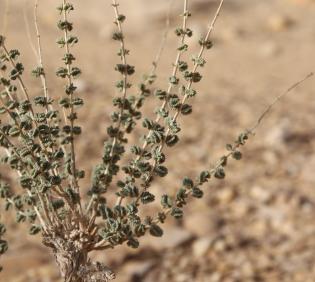
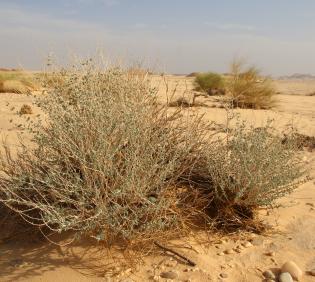
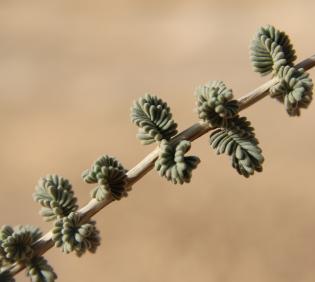
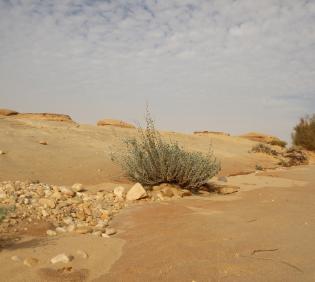
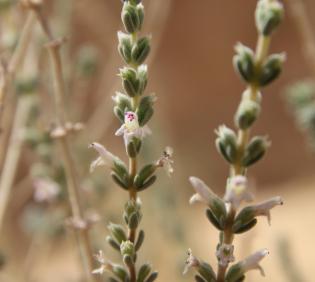
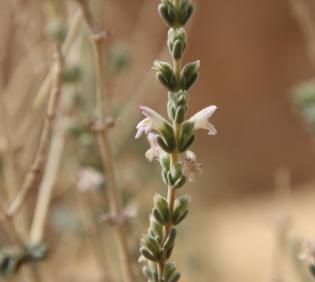
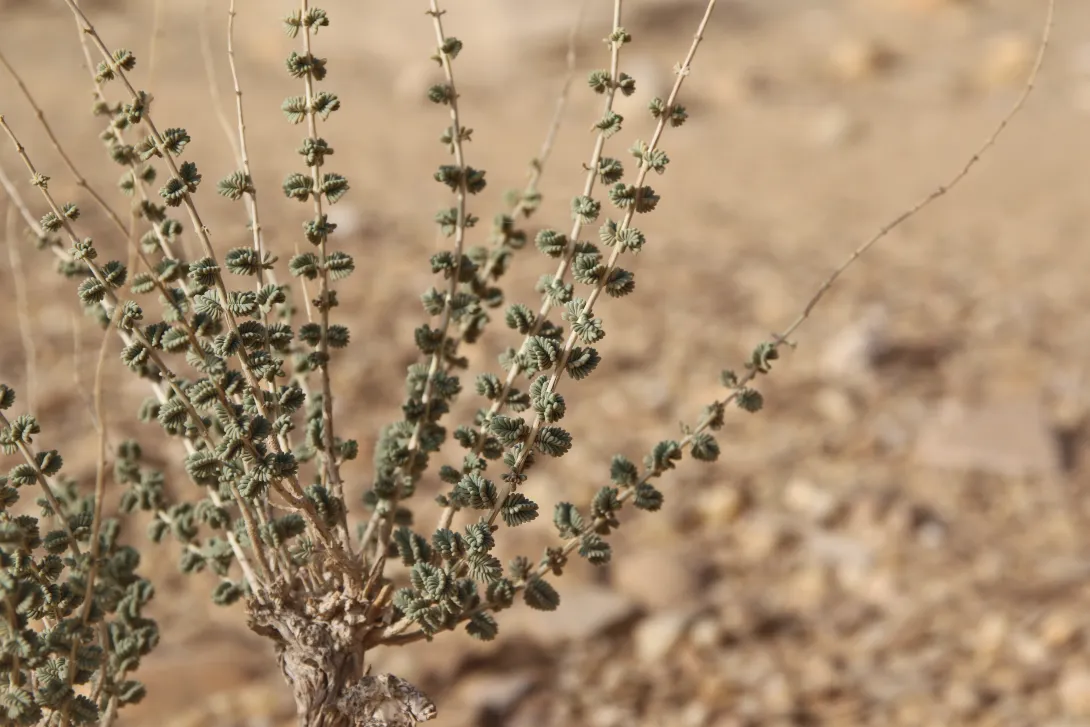
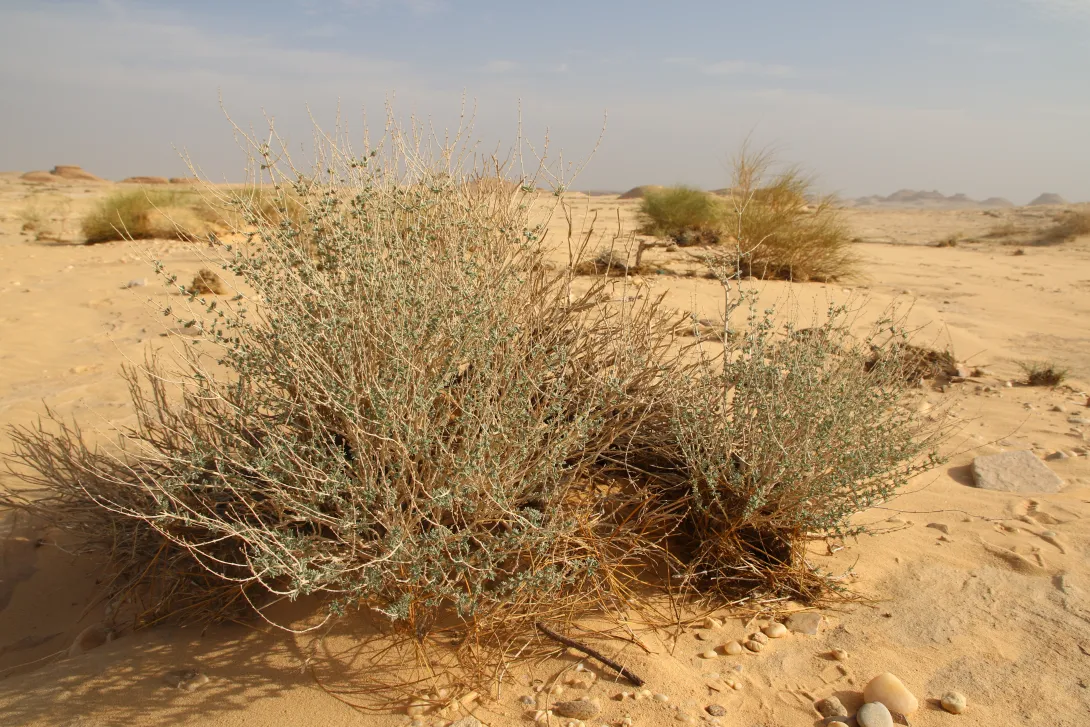
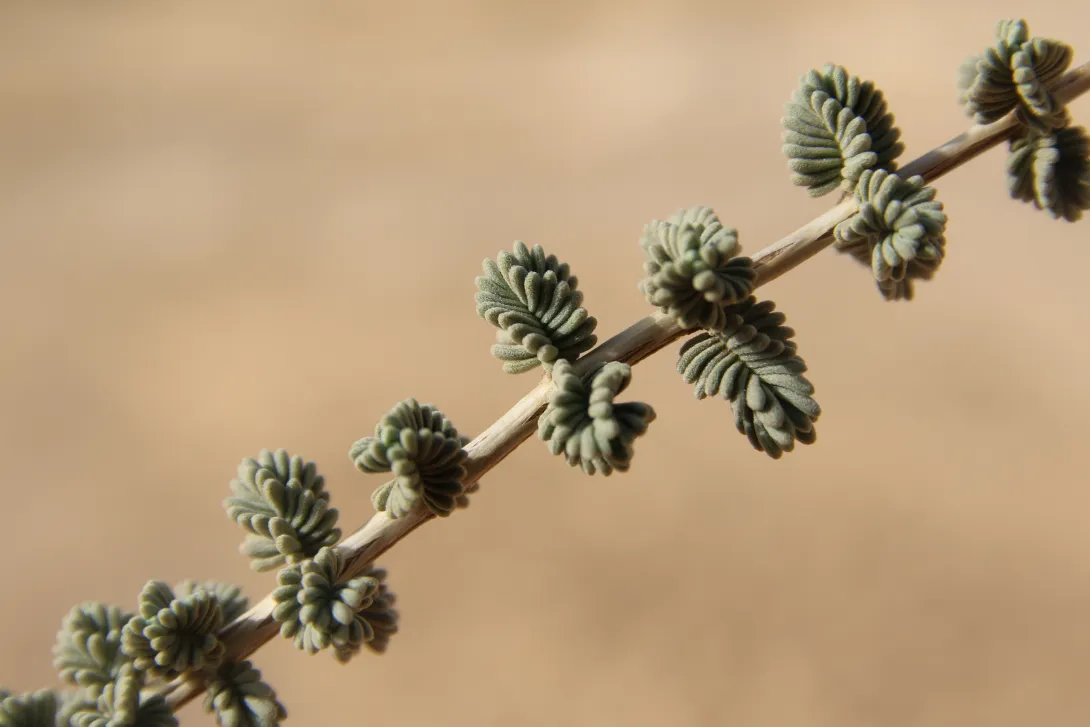
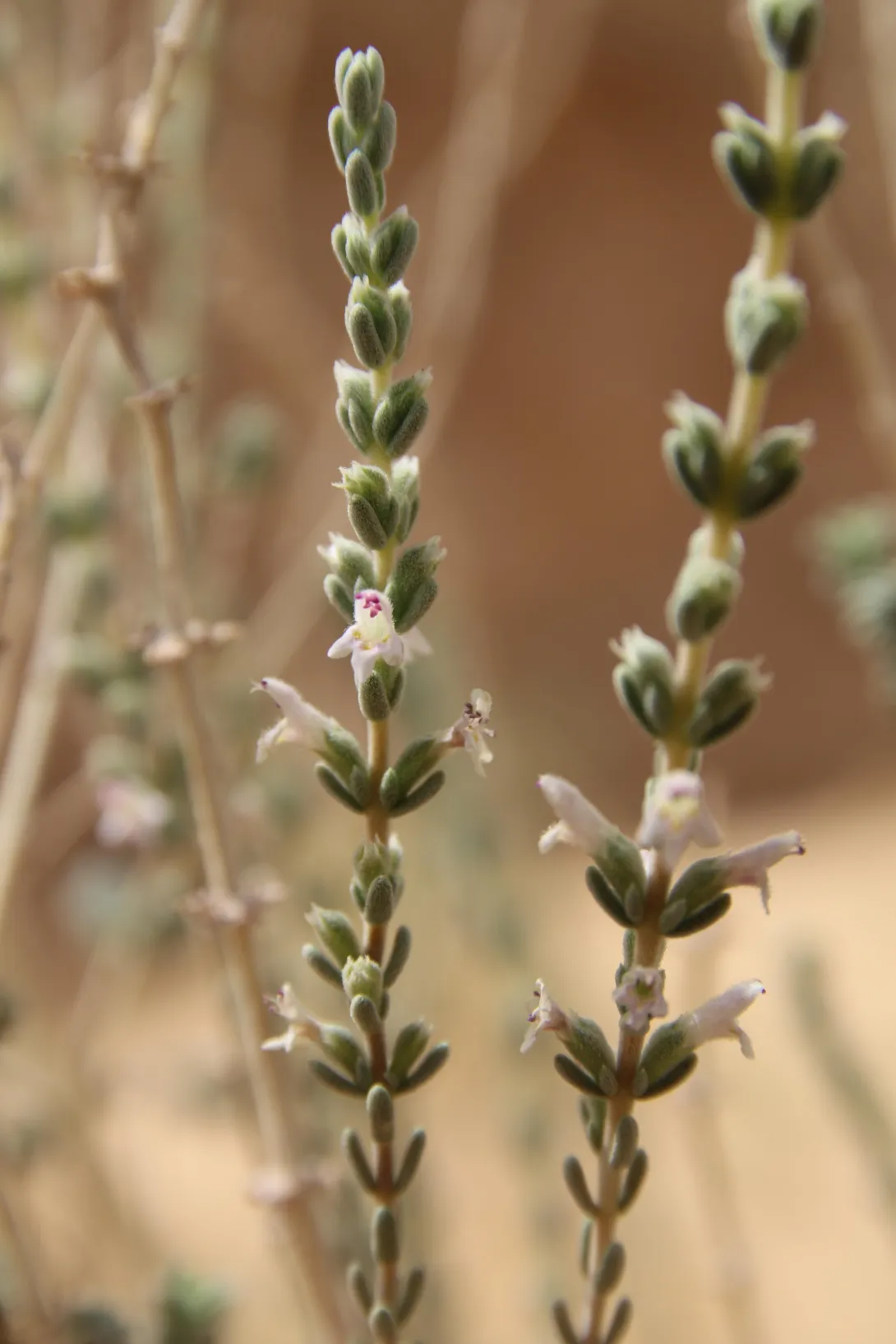
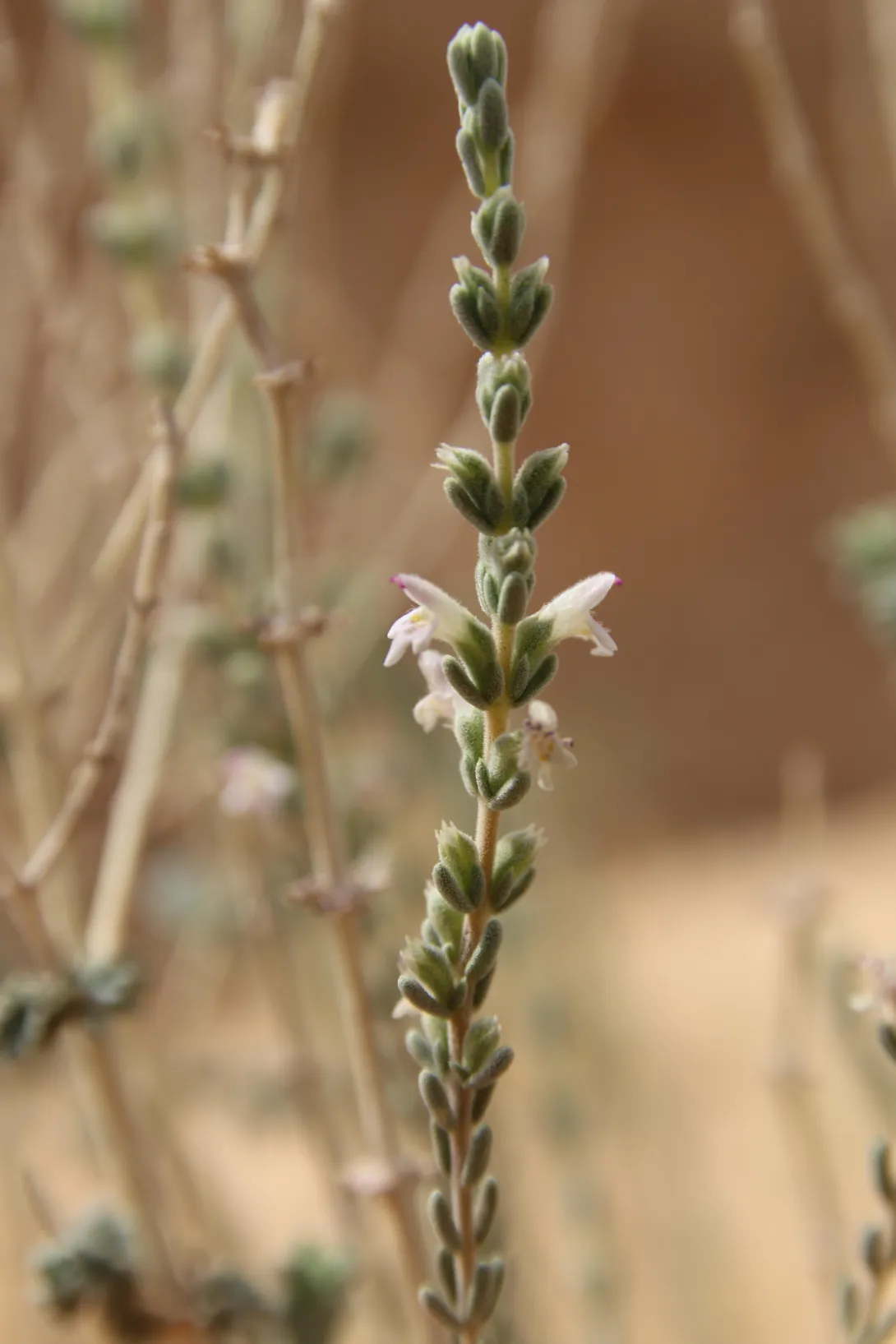
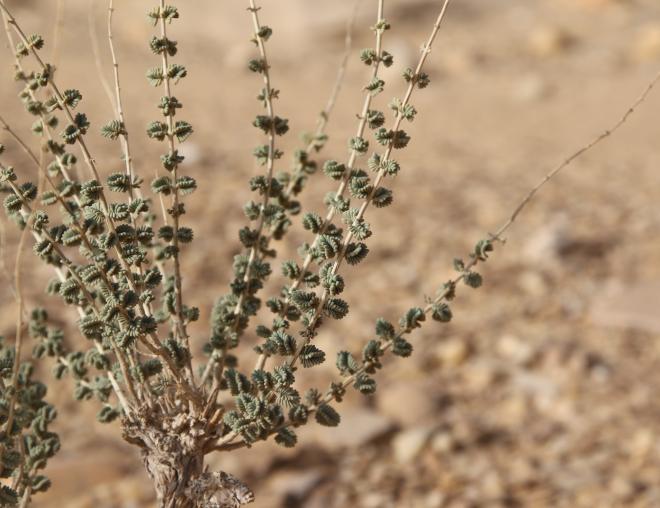
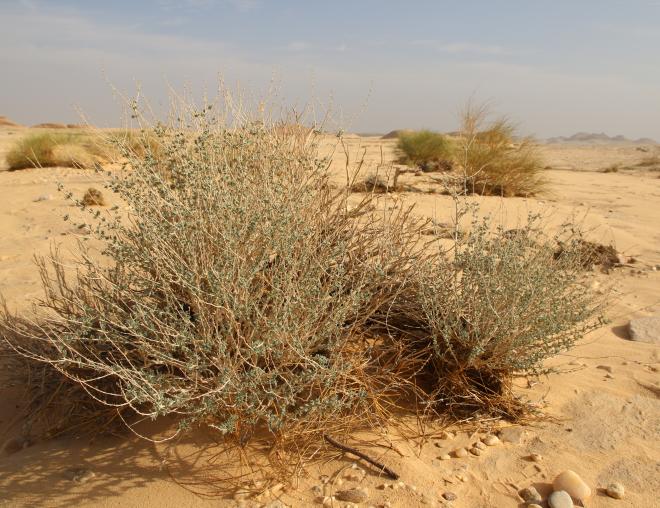
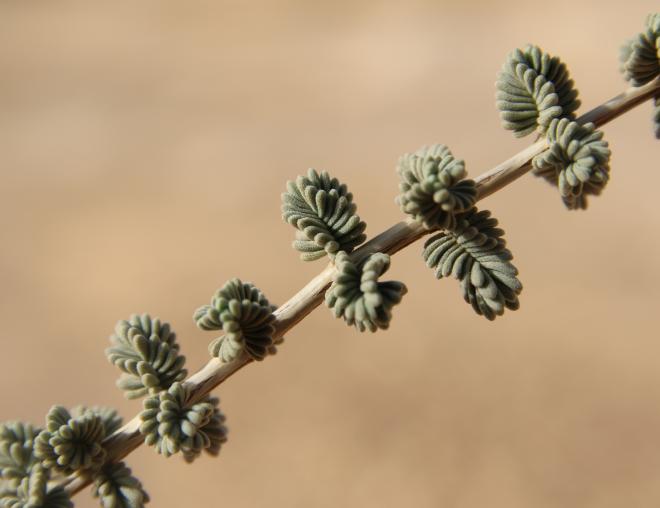
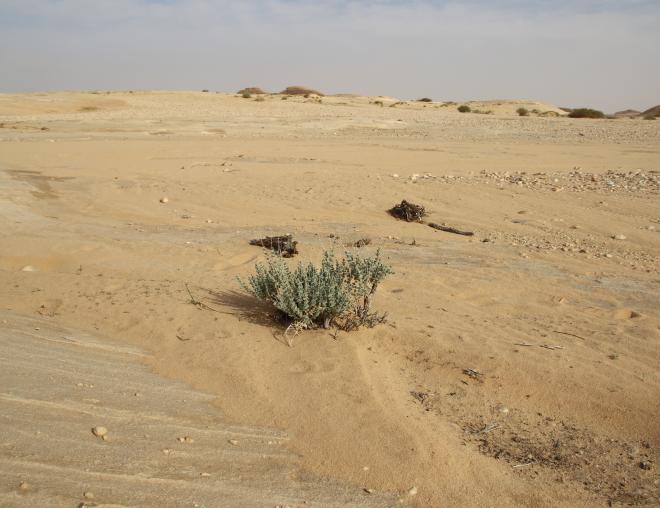
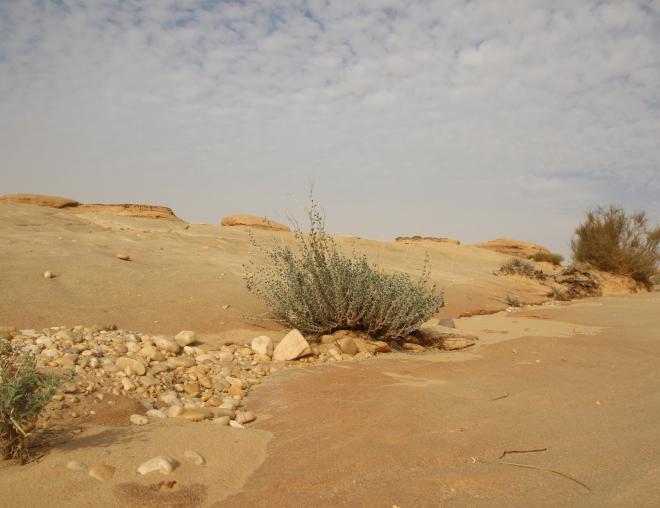
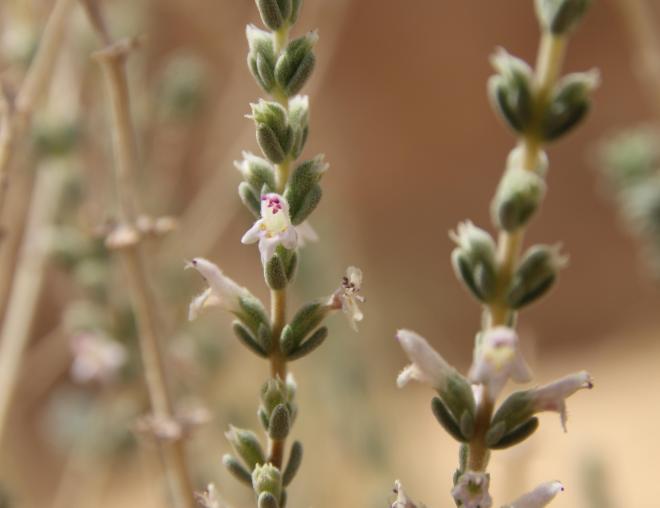
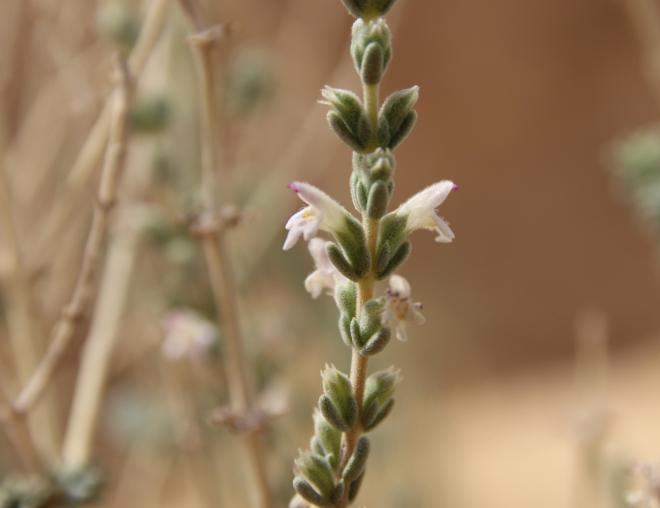
Small shrub (20–60 cm) with a woody base and intricately branched, spreading, lignified stems. The entire plant is densely covered with white, retrorse, eglandular hairs, as well as transparent sessile glands, and emits a strong aromatic scent reminiscent of za’atar (thymol-carvacrol). Leaves are crowded, sessile, thick, and narrowly oblong with revolute margins. Leaf size varies with the season but always remains shorter than the internodes: winter leaves measure 5–7 × 0.8–1.5 mm with internodes of 7–12 mm, while summer leaves are smaller (2–3 × 0.8–1 mm) with internodes under 0.2 mm. Inflorescences reach up to 15 cm in length, consisting of verticillasters bearing up to 10 flowers. Bracteoles are small, numerous, ovate, mucronate, and shorter than the calyx. The calyx is tubular, up to 4 mm long, sessile, 5-veined, with nearly equal teeth about 1 mm long. The white corolla is up to 6 mm long, white-hairy, and glandular; the tube is 4–5 mm, angular, and exserted. The upper lip is retuse; the lower lip has three lobes. There are four fertile stamens, all exserted, with lilac anthers. The style is exserted with a bi-lobed stigma. Nutlets are smooth and nearly ovoid.
- Growth Form
-
Description
-
Habitat and Distribution
- Habitat
-
Geographical Distribution Range
This Saharo-Arabian species is a sub-endemic species from Saudi Arabia and Jordan.
-
Ecology
-
Phenology
JanFebMarAprMayJunJulAugSepOctNovDecFloweringFructification
- Origin
-
IUCN Red List Category
 Endangered
-
Remarks
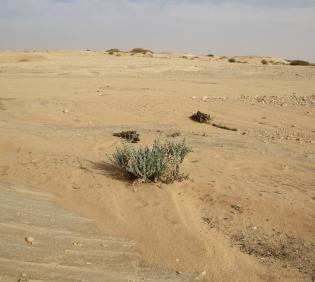
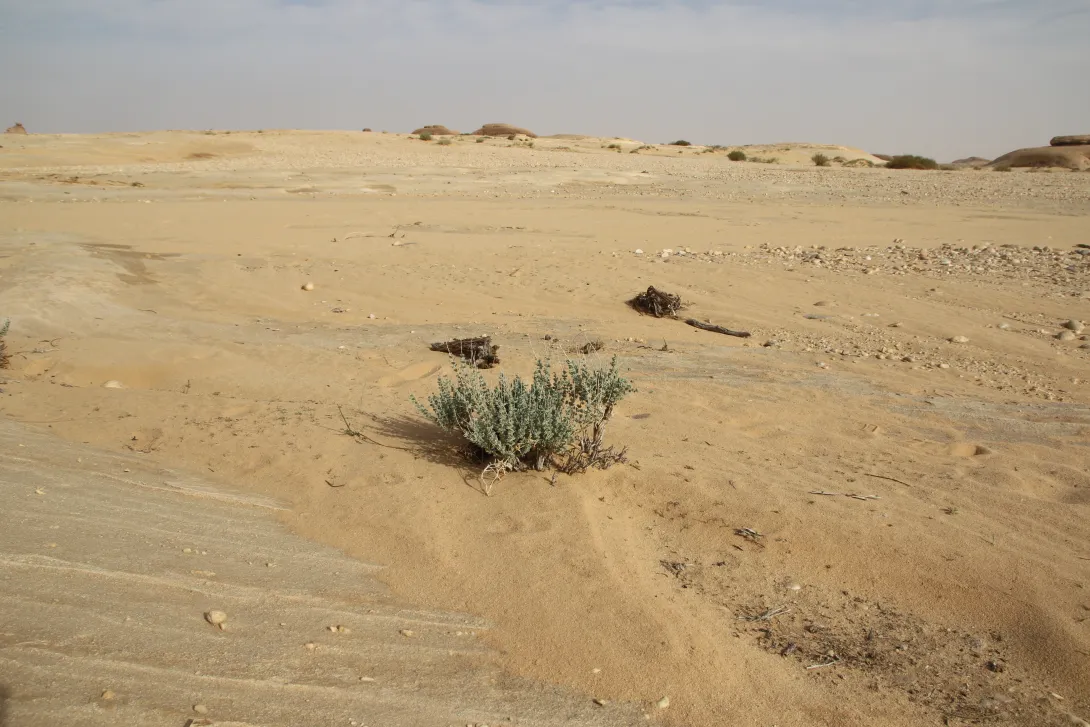
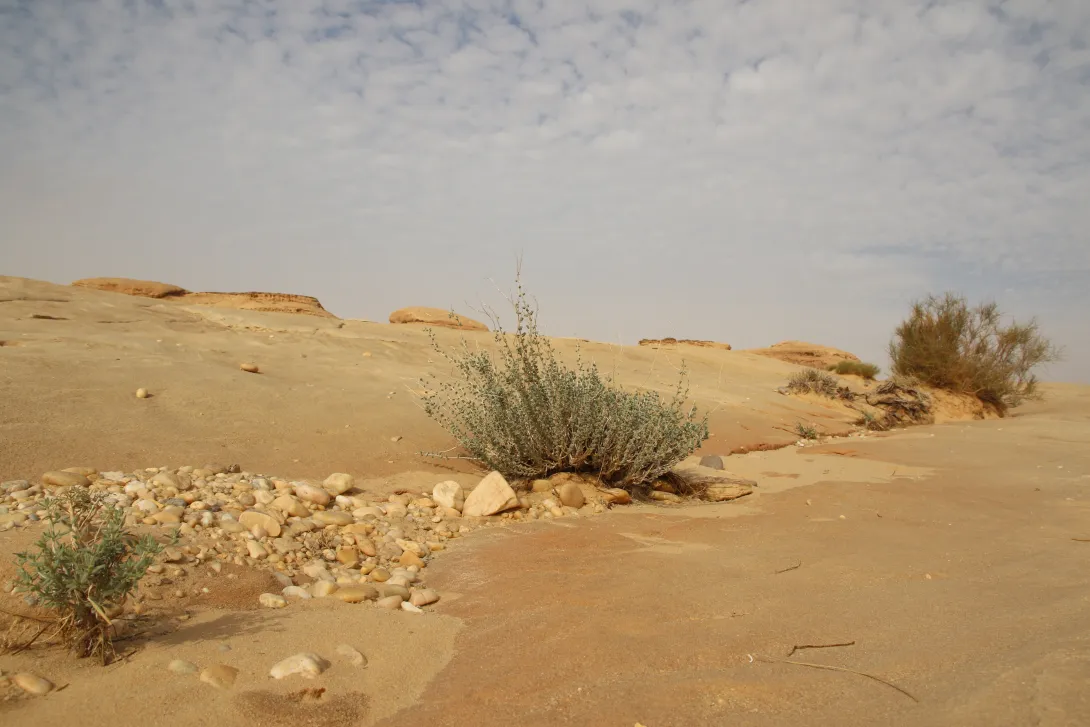
The Nabatean Thyme is a very rare species, classified as Endangered on the IUCN Red List. It is narrowly localized in AlUla County, where it depends on a specific geological context: it grows in sand pockets within crevices of white sandstone outcrops. The species was discovered along the ancient Incense Road used during the Nabatean Kingdom, which is why it was given the name nabateorum. Highly palatable to livestock, this plant is heavily impacted by grazing pressure. In the wild, it is often difficult to find individuals in good condition. Most are reduced to compact, densely branched, rounded shrubs, rarely reaching their full size potential.
-
Phenology
-
Uses and Values
-
Aromatic and Medicinal Use
Aromatic usages; Medicinal use
-
Other Usages
Melliferous
-
Description of Traditional Uses
A strongly aromatic plant used as a culinary herb, flavoring, infusion, and traditional remedy. It is also valued as a nectar-producing plant.
-
Aromatic and Medicinal Use
Gallery