Scrophularia hypericifolia Wydler
علقا - العلقى
Syn. Scrophularia syriaca Benth.
Sand Figwort
Scrophulariaceae
1 / 9



-
Morphological Description
-
Description
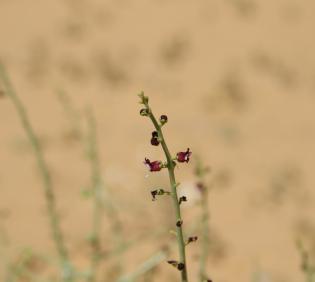
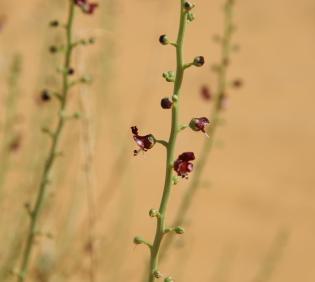
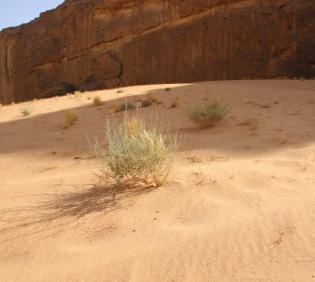
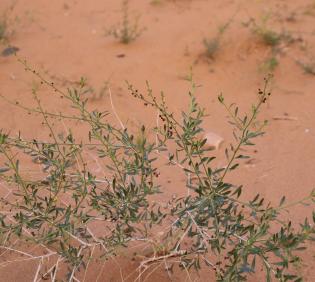
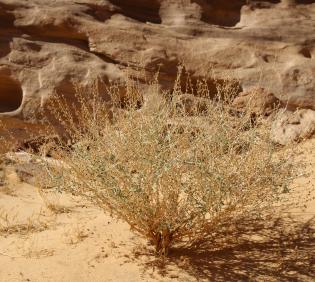
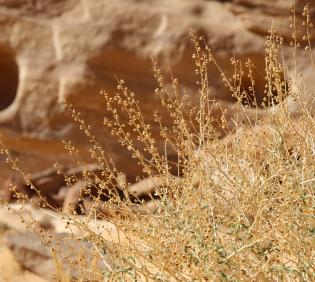
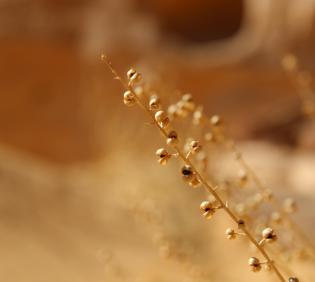
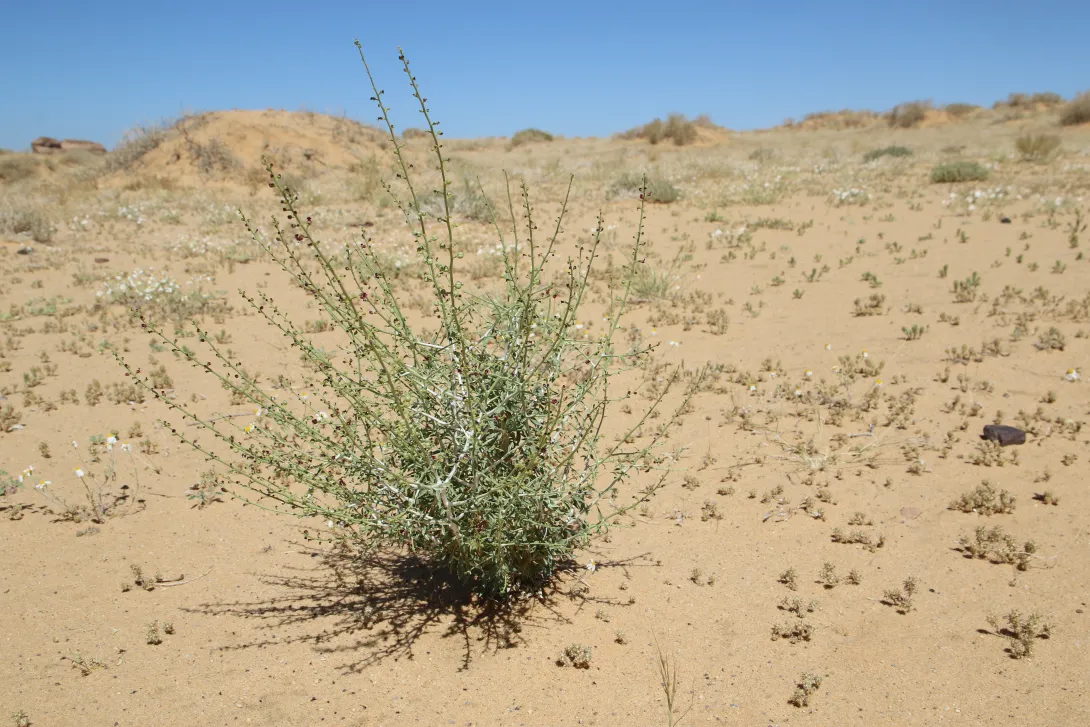
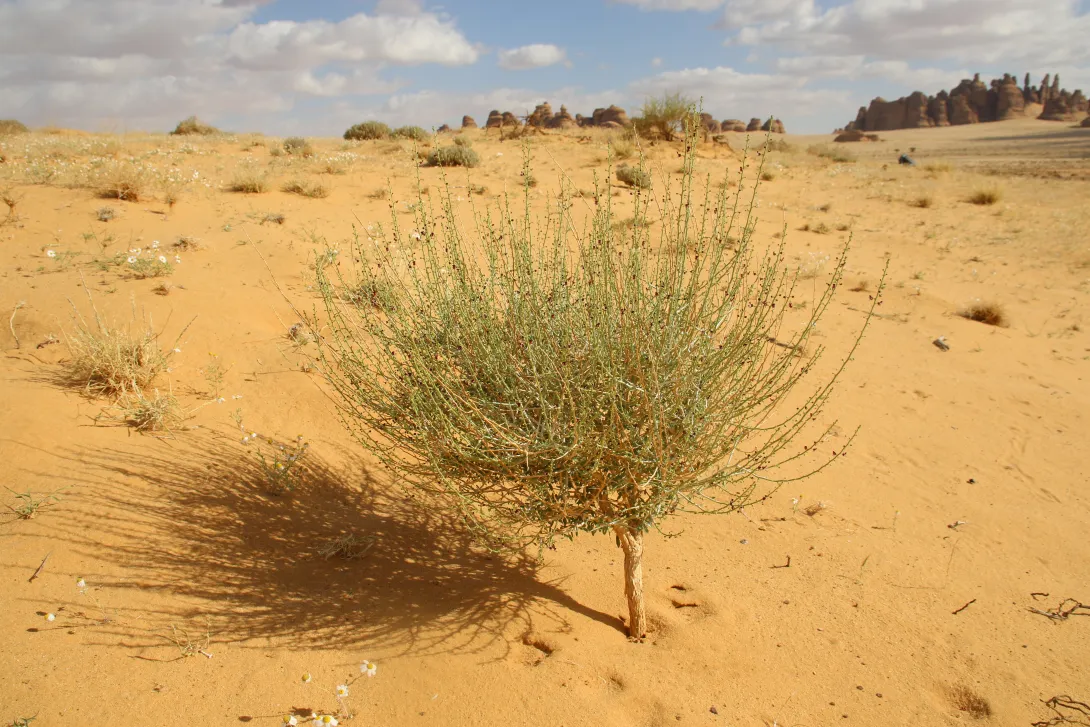
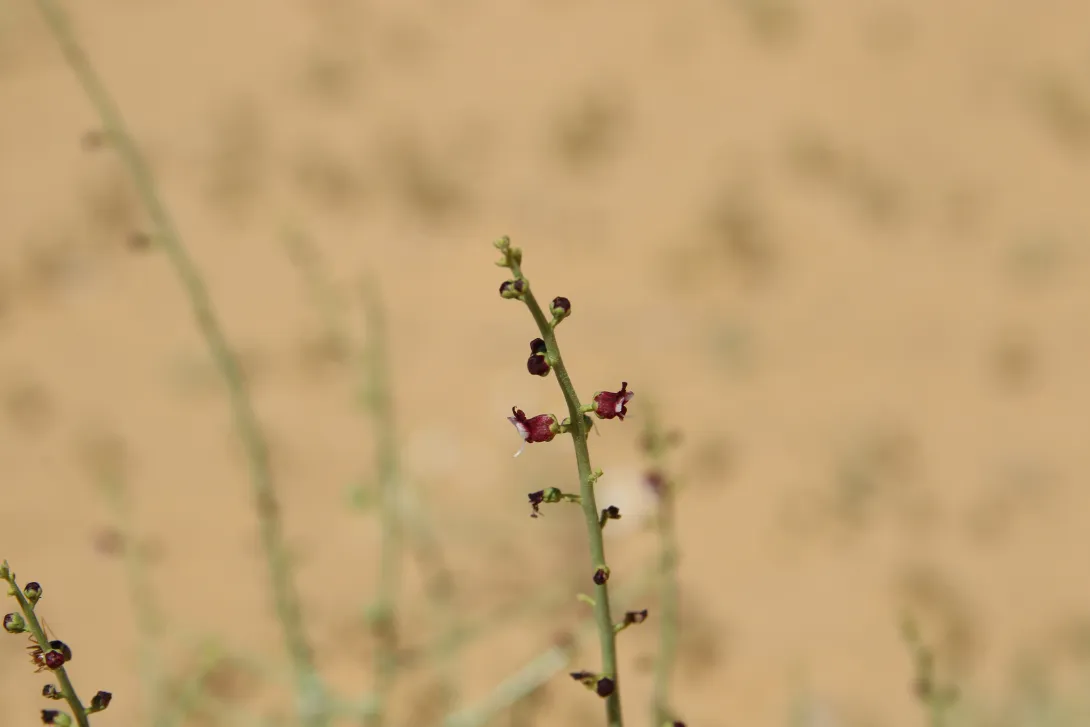
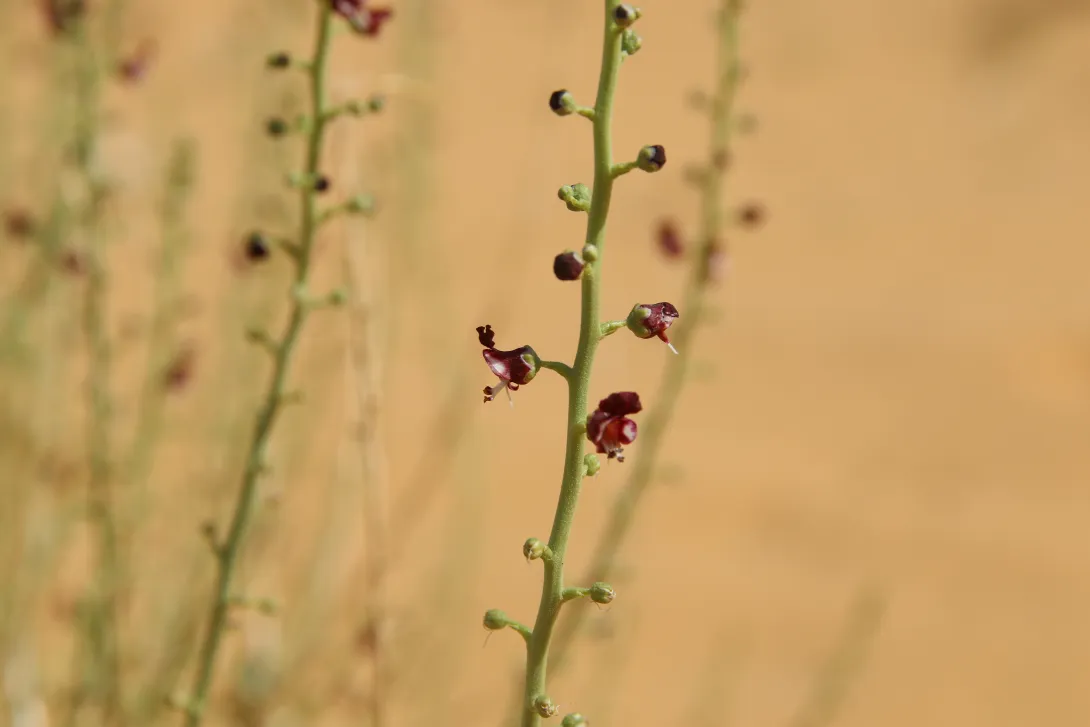
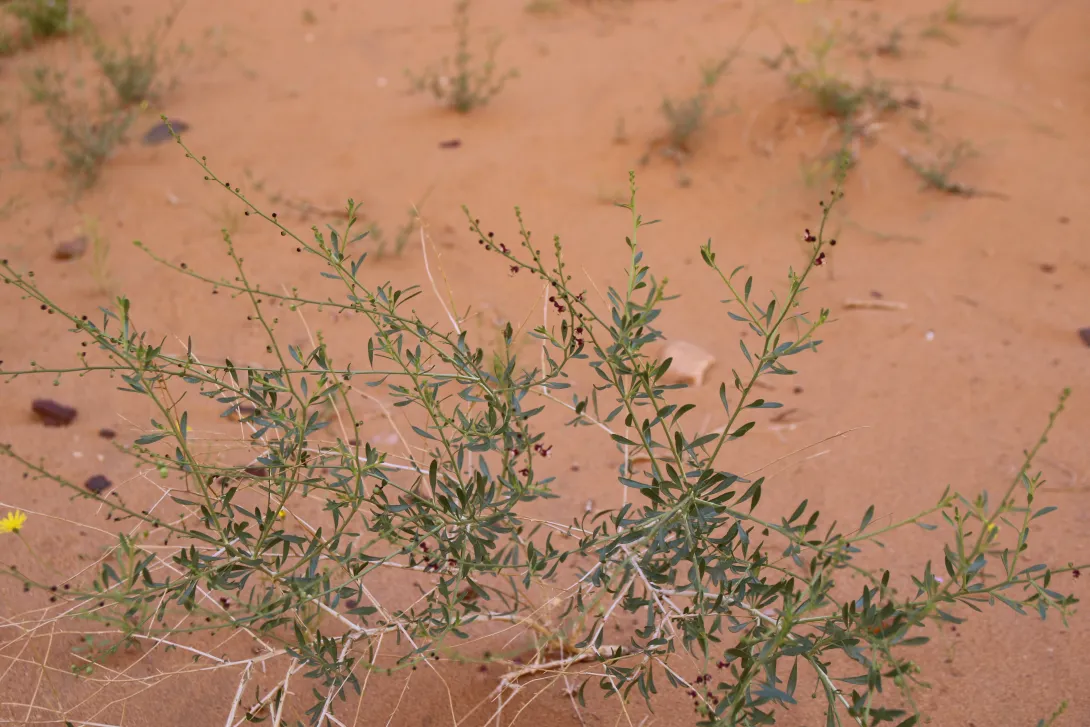
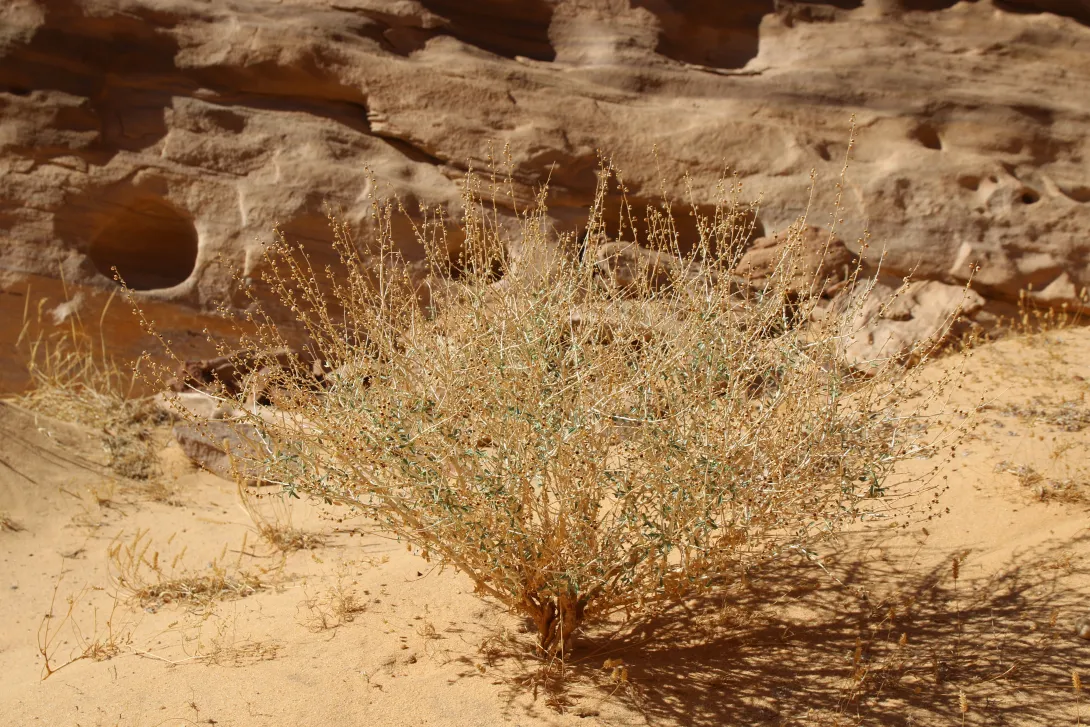
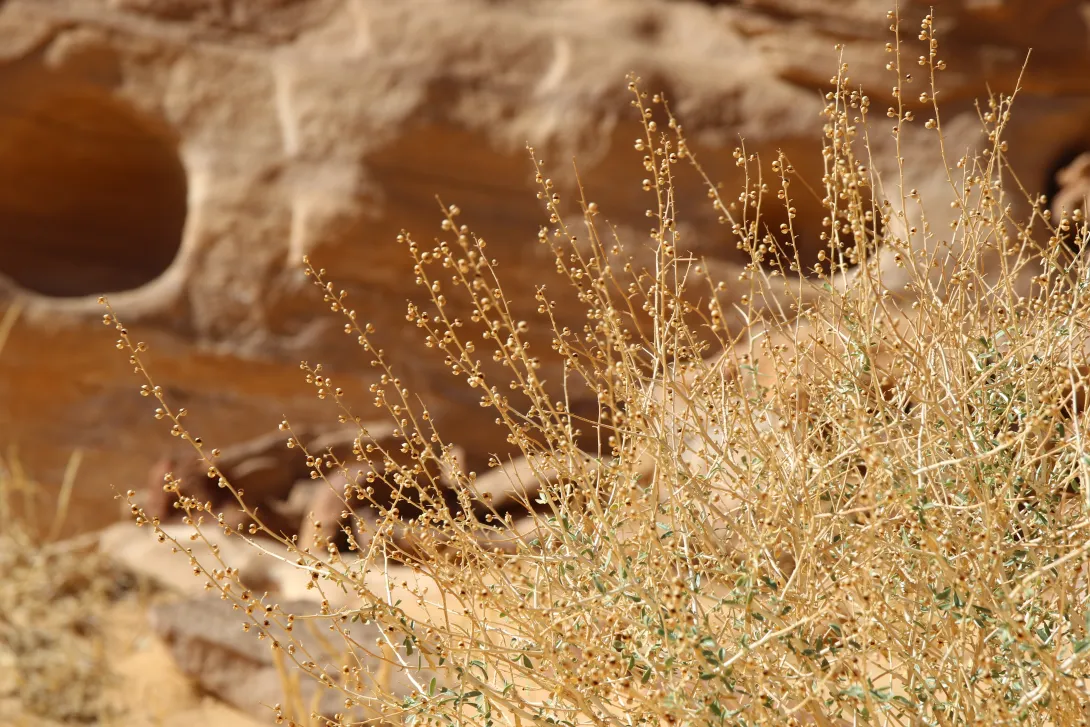
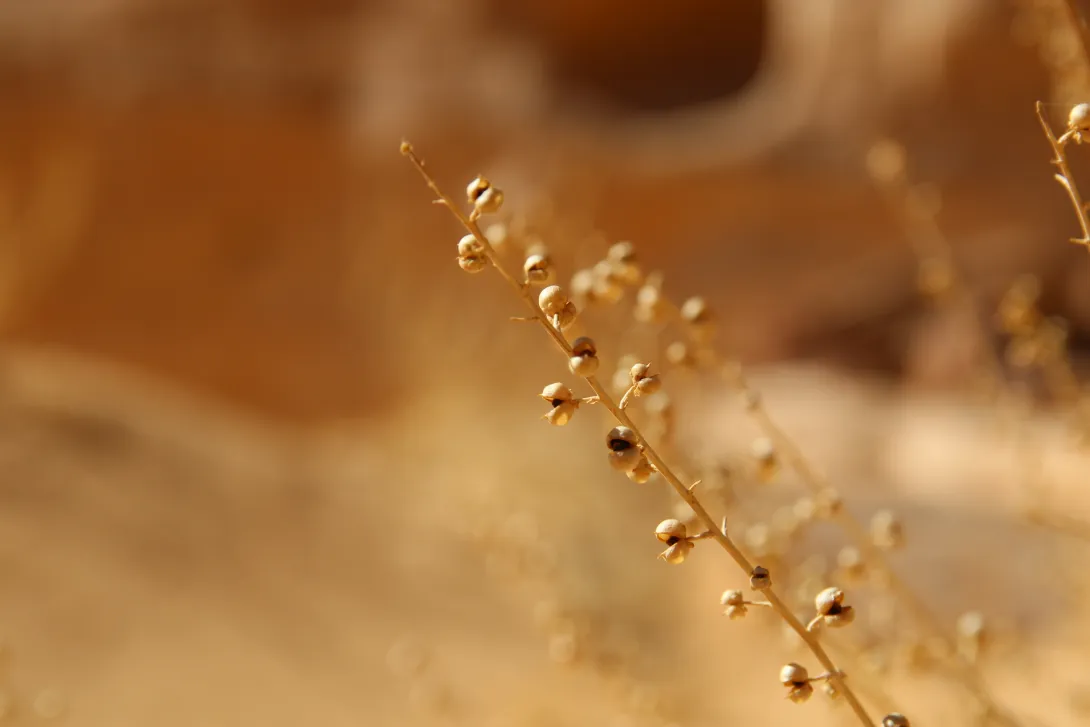
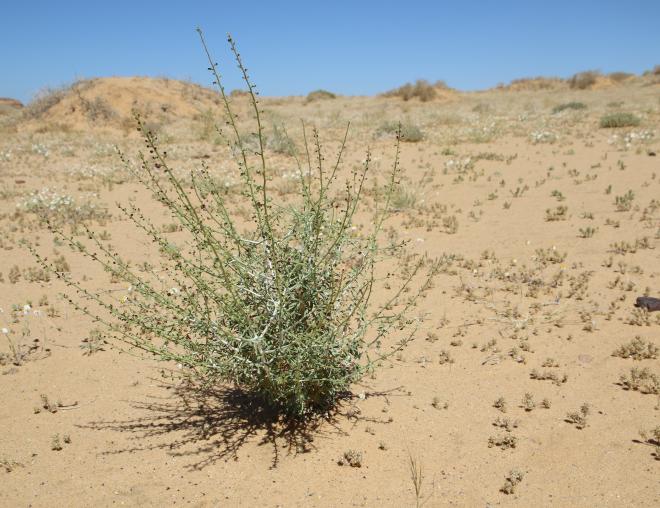
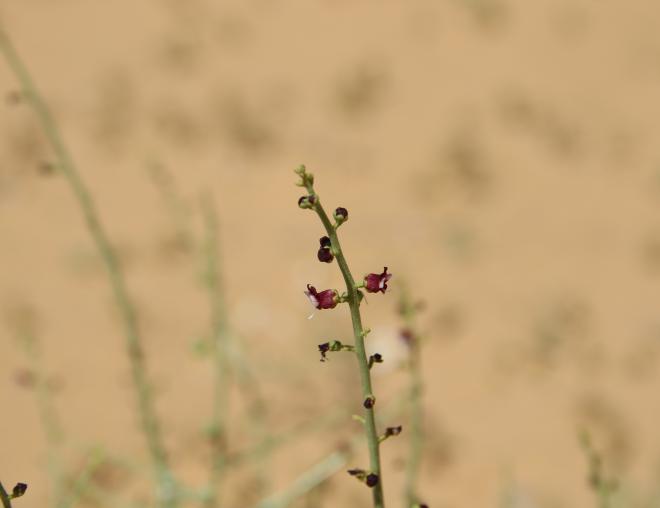
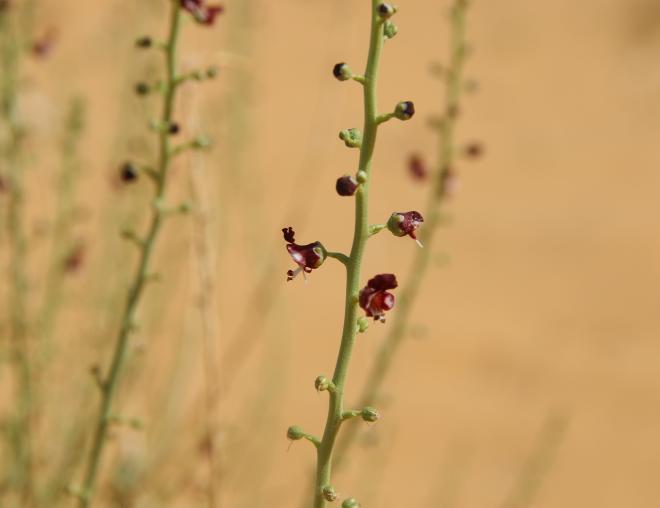
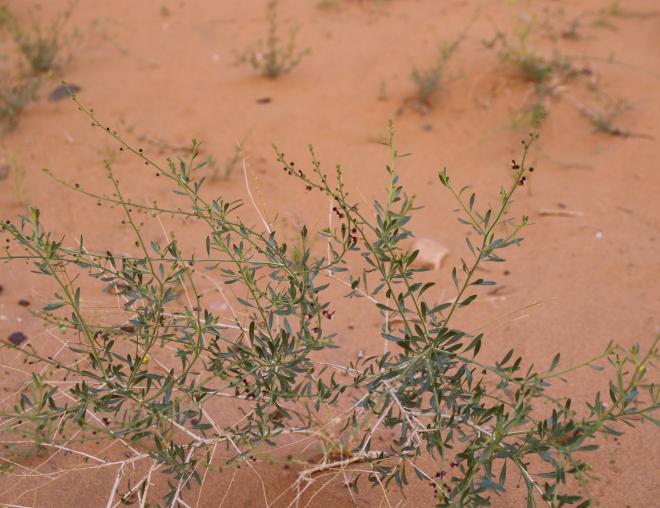
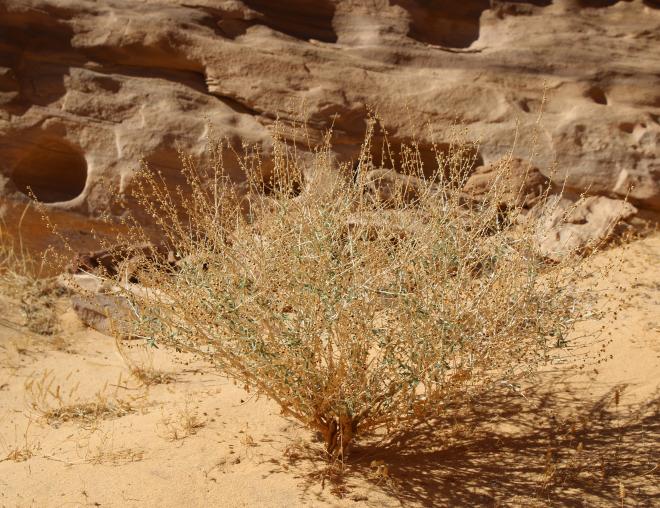
Perennial, much-branched, glabrous small shrub, 20–50 cm tall, sometimes reaching up to 75 cm, with rigid, sparsely leafy stems. Leaves are alternate, sessile to subsessile, entire, oblong-spatulate, up to 20 mm long and 4 mm wide. Inflorescence consists of terminal, lax racemes composed of 3–7 flowers. Calyx is small, about 3 mm long, with orbicular lobes and narrow white margins. Corolla is dark red and about 5 mm long. Flowers have 4 stamens and sometimes staminodes under the upper lip of the corolla. Fruits are subglobose capsules, approximately 4 mm long.
- Growth Form
-
Description
-
Habitat and Distribution
- Habitat
-
Geographical Distribution Range
This Saharo-Arabian species is distributed from Sahara and across the Middle East, from Morocco to Iran. Within the Arabian Peninsula, it is native to Jordan and Saudi Arabia.
-
Ecology
-
Phenology
JanFebMarAprMayJunJulAugSepOctNovDecFloweringFructification
- Origin
-
IUCN Red List Category
 Not Evaluated
-
Remarks
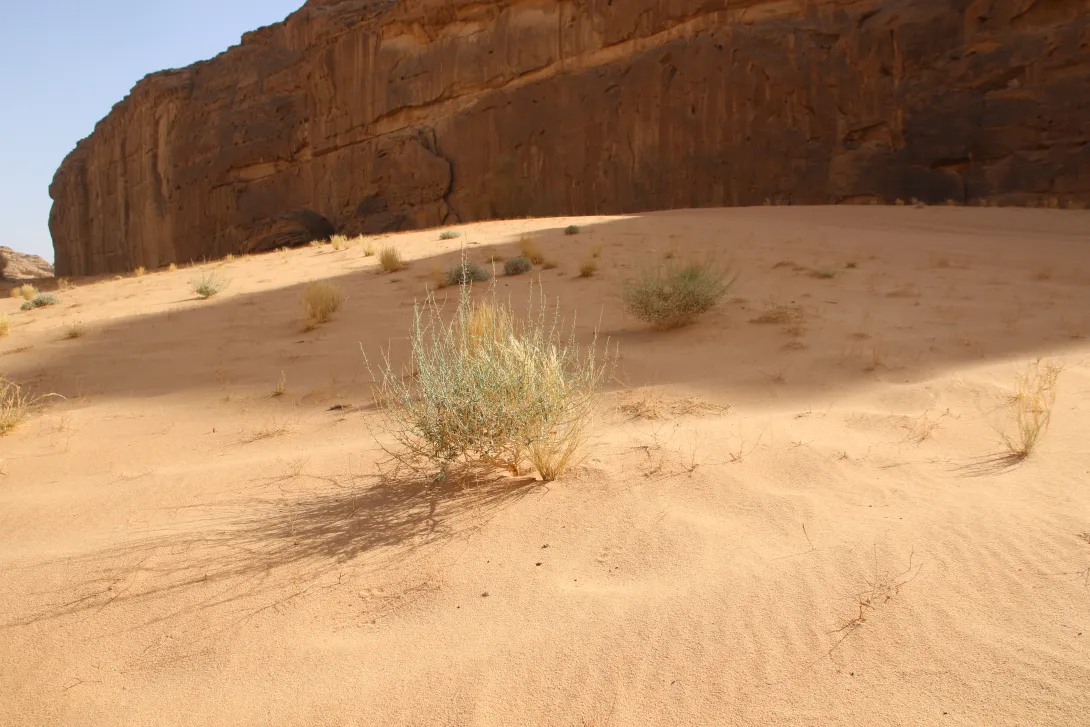
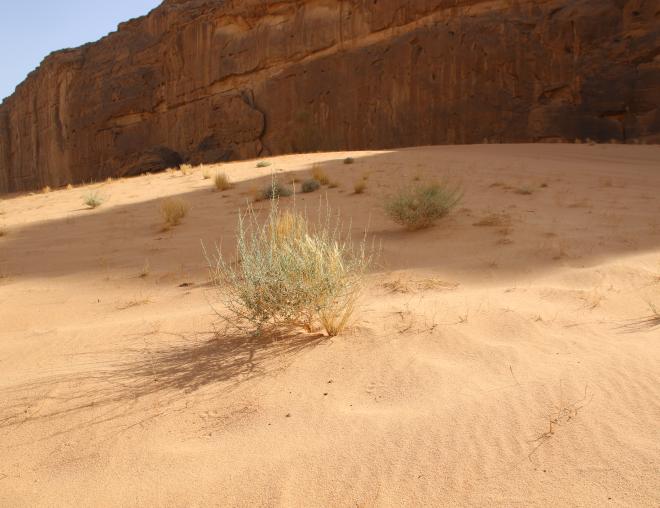
Sand Figwort is among the rare shrubs adapted to sandy dunes, where it can form extensive clusters of individuals.
-
Phenology
-
Uses and Values
-
Aromatic and Medicinal Use
Medicinal use
-
Description of Traditional Uses
Scrophularia species have a record in traditional medicine, commonly in preparations for skin complaints, inflammation, and fever.
-
Aromatic and Medicinal Use
Gallery