Moringa peregrina (Forssk.) Fiori
بان
Syn. Hyperanthera peregrina Forssk.
Moringa, Leafless Bean Tree, Yasar Tree
Moringaceae
1 / 6


-
Morphological Description
-
Description
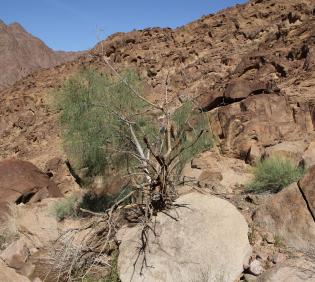
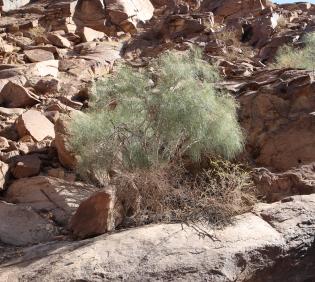
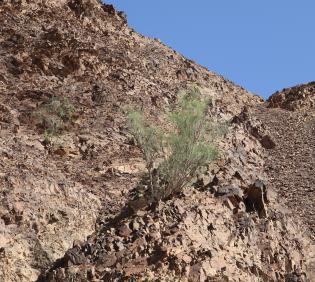
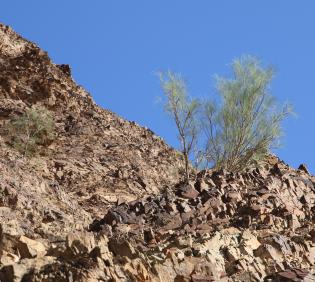
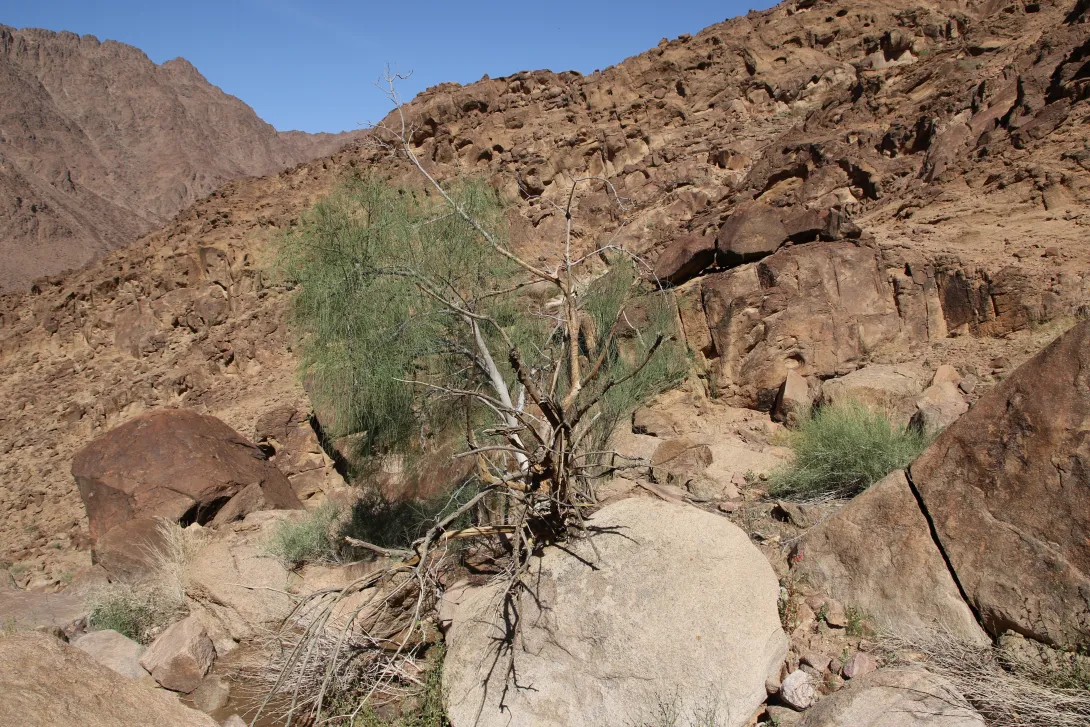
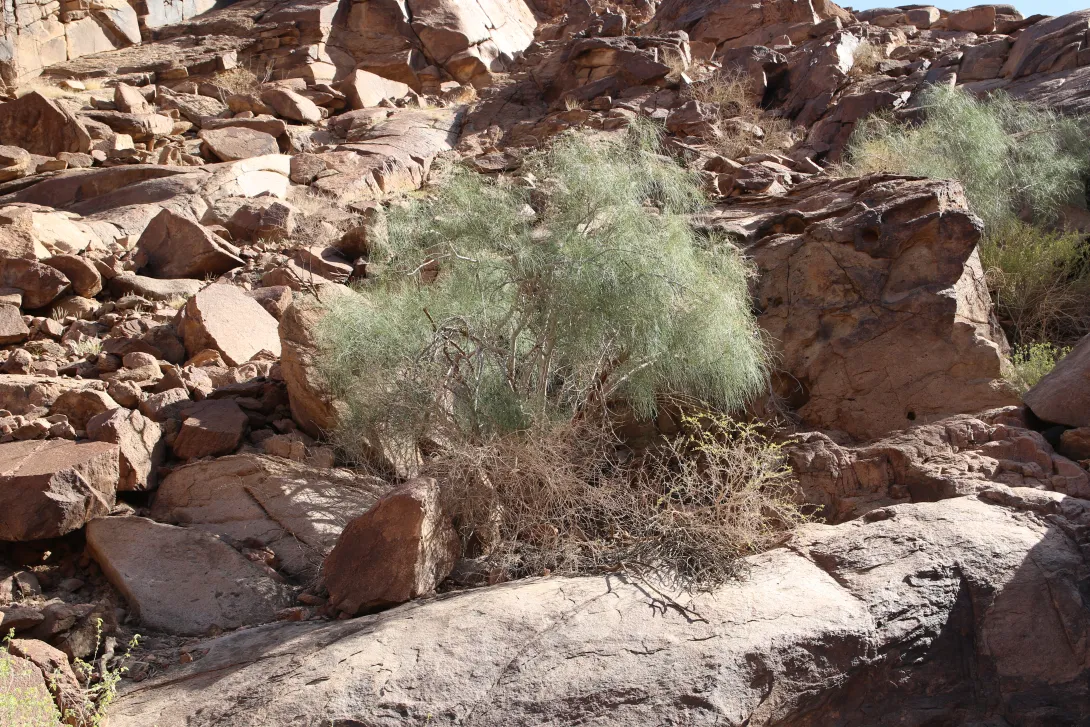
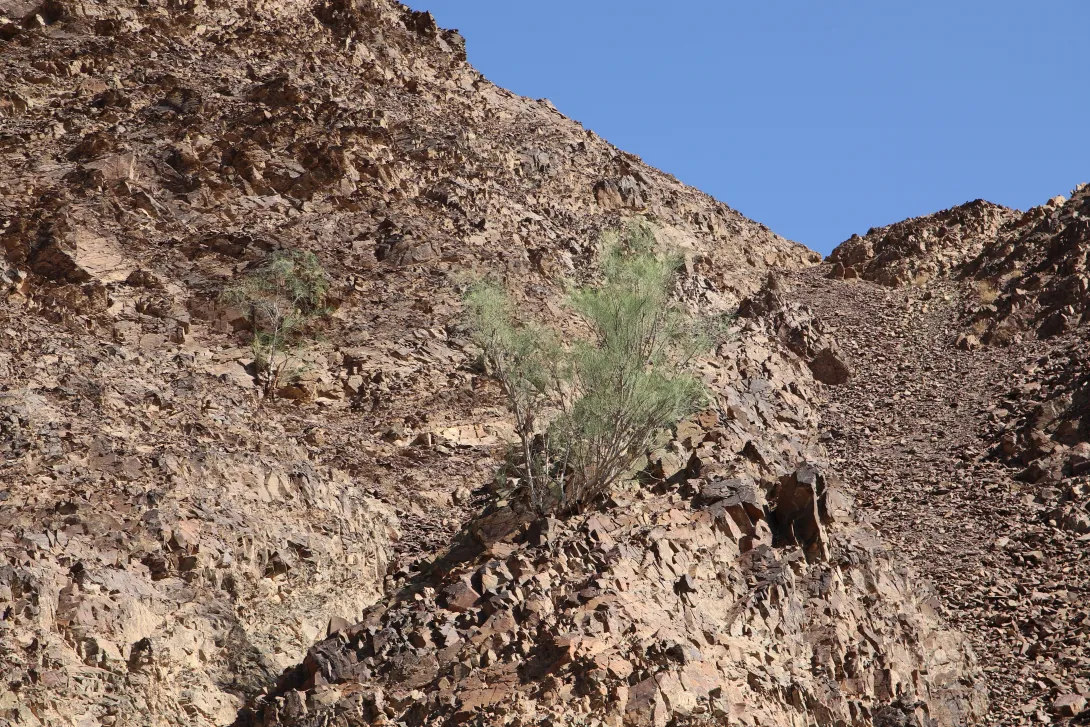
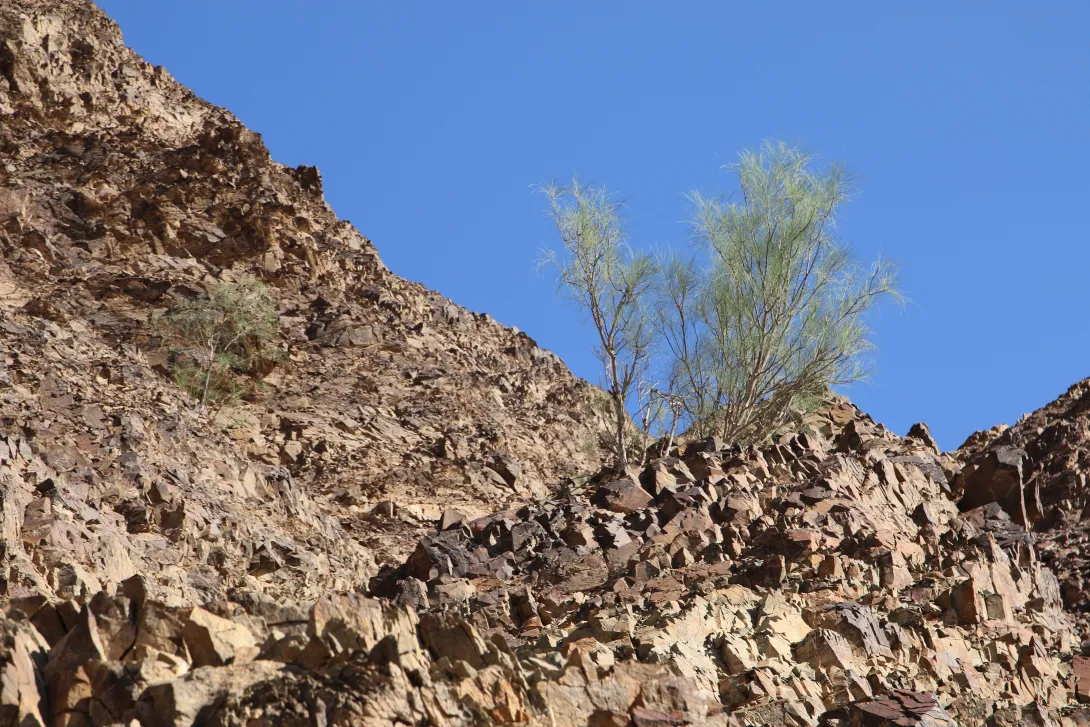
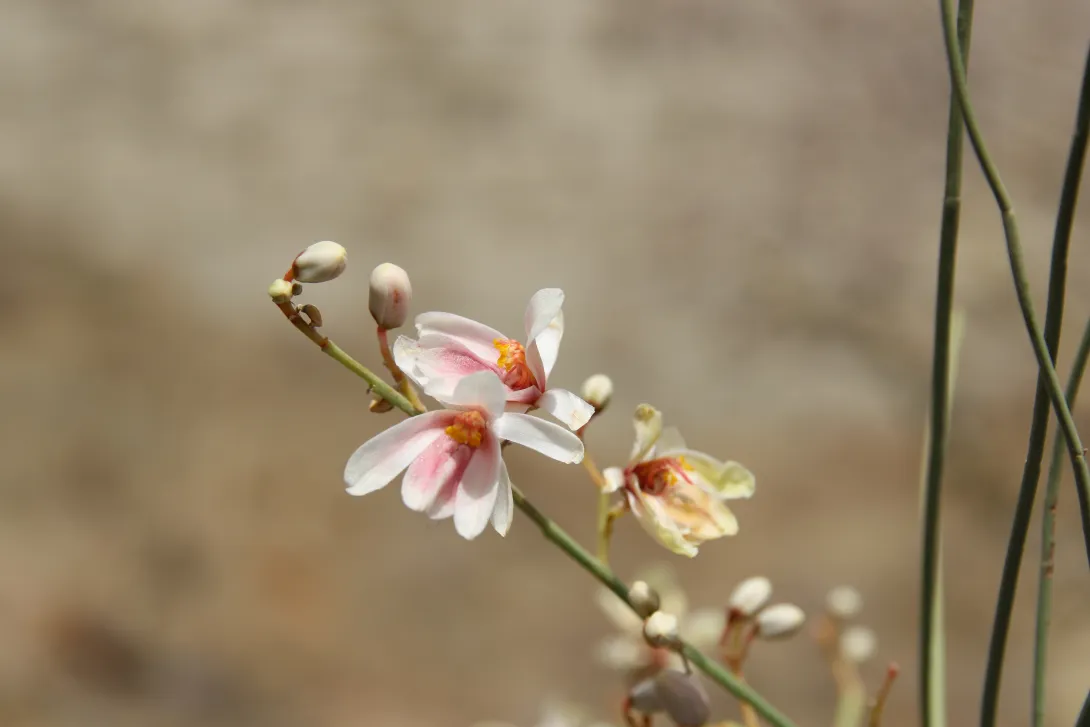
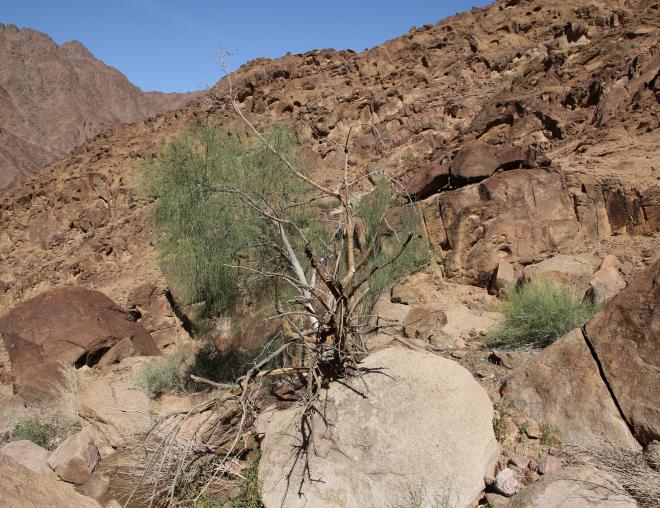
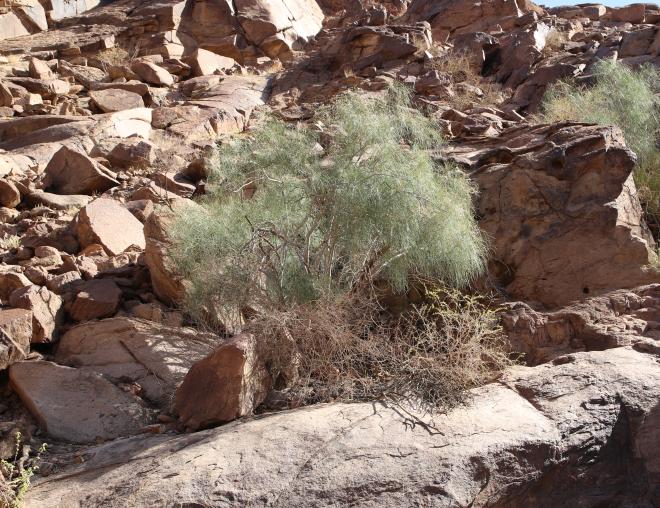
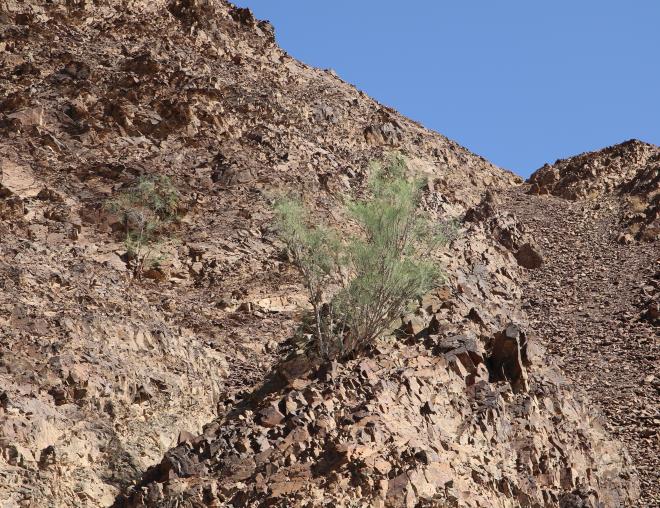
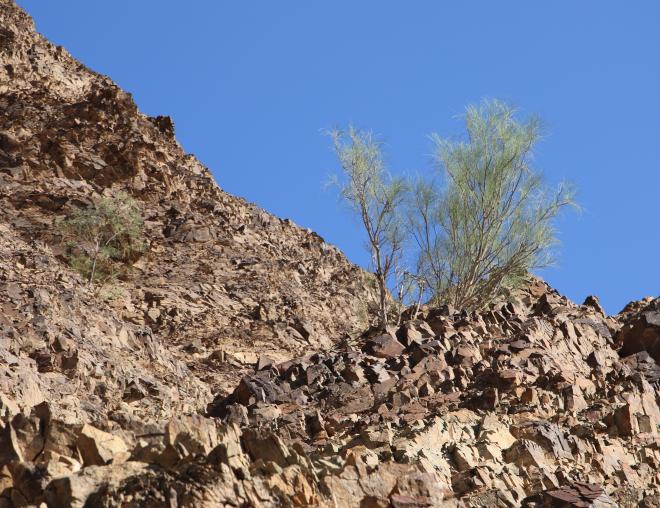
Deciduous small to tall tree, reaching up to 1 m in height, with a characteristic trunk bearing smooth grey bark and soft white wood. This species is typically deciduous, shedding its leaves in response to climatic conditions, and often appears leafless or sparsely foliated with leaves mostly reduced to the rachis and a few small, remote leaflets. These leaflets are narrow, oblong to oblanceolate, and rarely exceed 10 mm in length. Leaves are alternate, up to 50 cm long, green and glaucous, minutely stipulate, and mostly bipinnate (occasionally 2- or 3-pinnate), with 3–5 pairs of primary rachillae. Inflorescences are axillary panicles bearing zygomorphic flowers (with bilateral symmetry), white to pinkish or pale yellow, streaked with red, and sweetly fragrant. Each flower has five free petals and five stamens of unequal lengths. The fruit is a long, pendulous capsule, up to 35 cm long and 1.5 cm wide, dehiscing along three valves. It is deeply ribbed longitudinally and furrowed. Seeds are large, ovoid, torulose, trigonal, wingless, and white, measuring up to 15 × 10 mm.
- Growth Form
-
Description
-
Habitat and Distribution
- Habitat
-
Geographical Distribution Range
This Sudanian species is distributed from Egypt to North-East Tropical Africa, Syria to Arabian Peninsula where it occurs in Gulf States, Saudi Arabia, Oman and Yemen.
-
Ecology
-
Phenology
JanFebMarAprMayJunJulAugSepOctNovDecFloweringFructification
- Origin
-
IUCN Red List Category
 Least Concern
-
Remarks
The Moringaceae family consists of a single genus, Moringa. Two species occur in Saudi Arabia: Moringa peregrina (Forssk.) Fiori, a native species with wingless seeds, and Moringa oleifera Lam., a cultivated species with winged seeds introduced Saudi Arabia and native from India and Pakistan. The wild native species is increasingly threatened by hybridization with the cultivated species. Moringa peregrina is a culturally symbolic tree, often associated with resilience and life in arid landscapes. Beyond its medicinal value, it plays a vital role in local heritage, used for food, oil extraction, and traditional practices across the Arabian Peninsula.
-
Phenology
-
Uses and Values
-
Aromatic and Medicinal Use
Medicinal use
-
Other Usages
Palatable
-
Description of Traditional Uses
Highly valued for its edible oil extracted from seeds and leaves, which is used in both culinary and traditional medicinal applications for skin and joint health.
-
Aromatic and Medicinal Use
Gallery