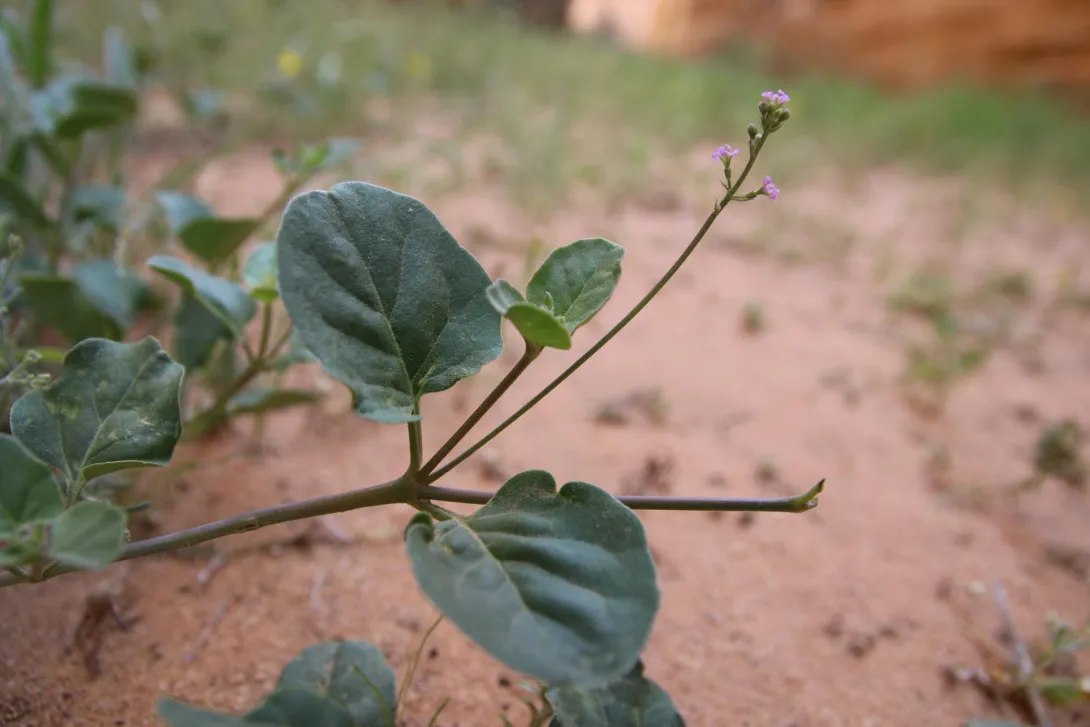
Commicarpus helenae (Schult.) Meikle
الرديف
Syn. Boerhavia helenae Schult.
Hogweed
Nyctaginaceae
1 / 7
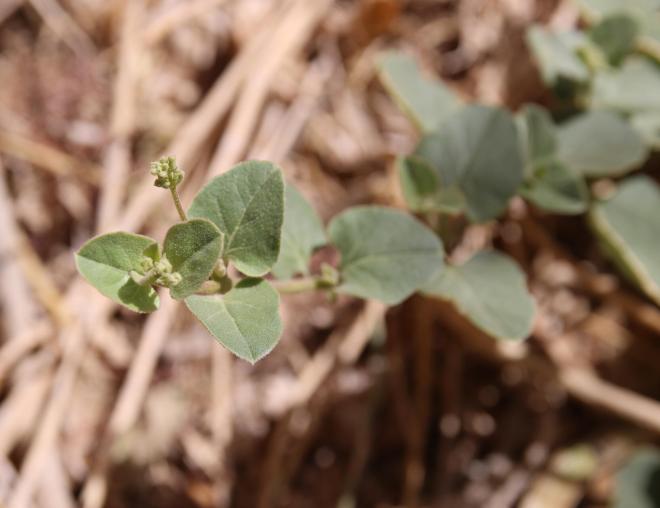
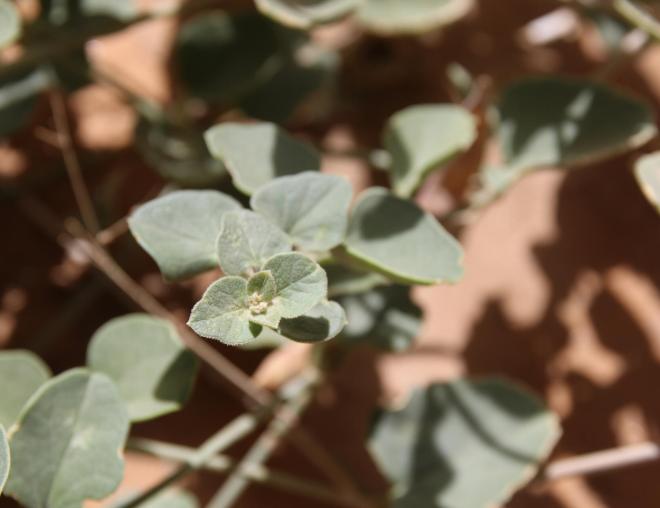
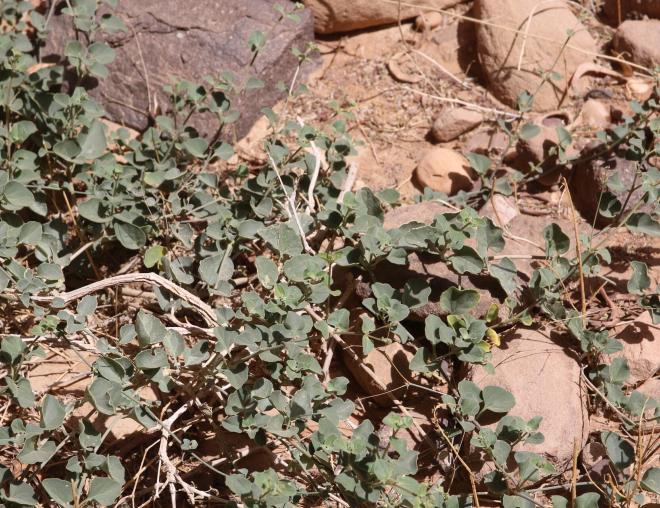

-
Morphological Description
-
Description
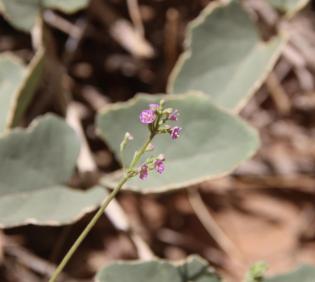
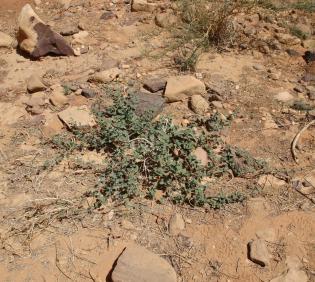
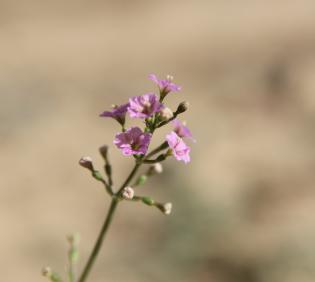
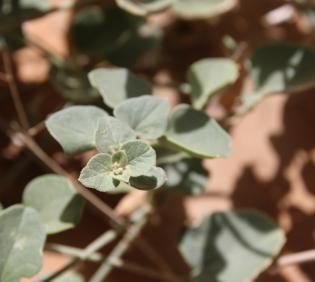
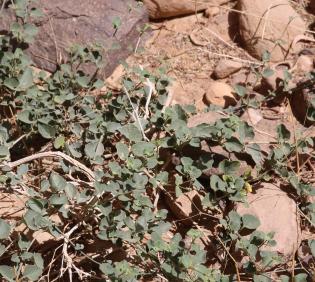
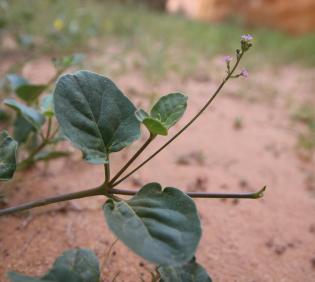
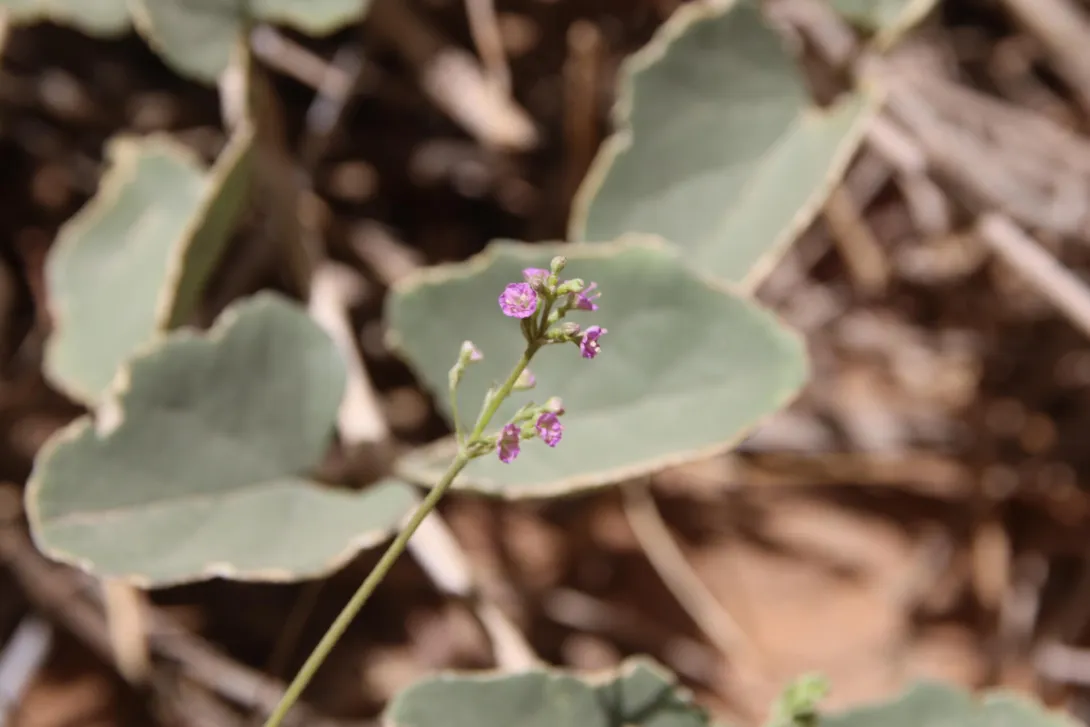
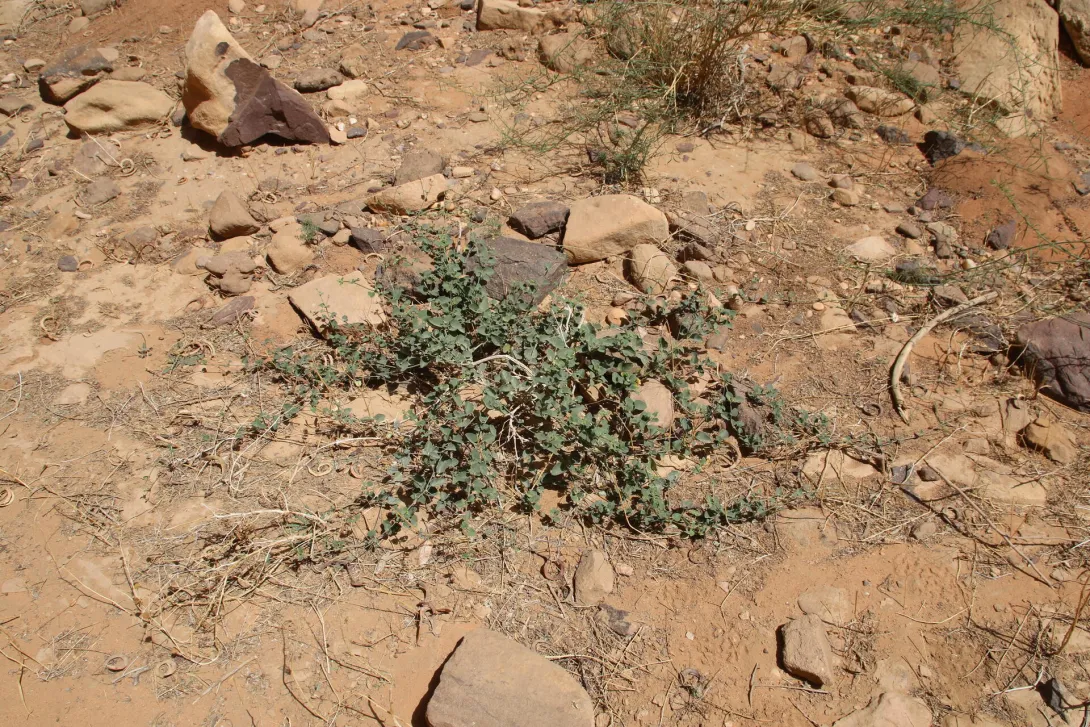
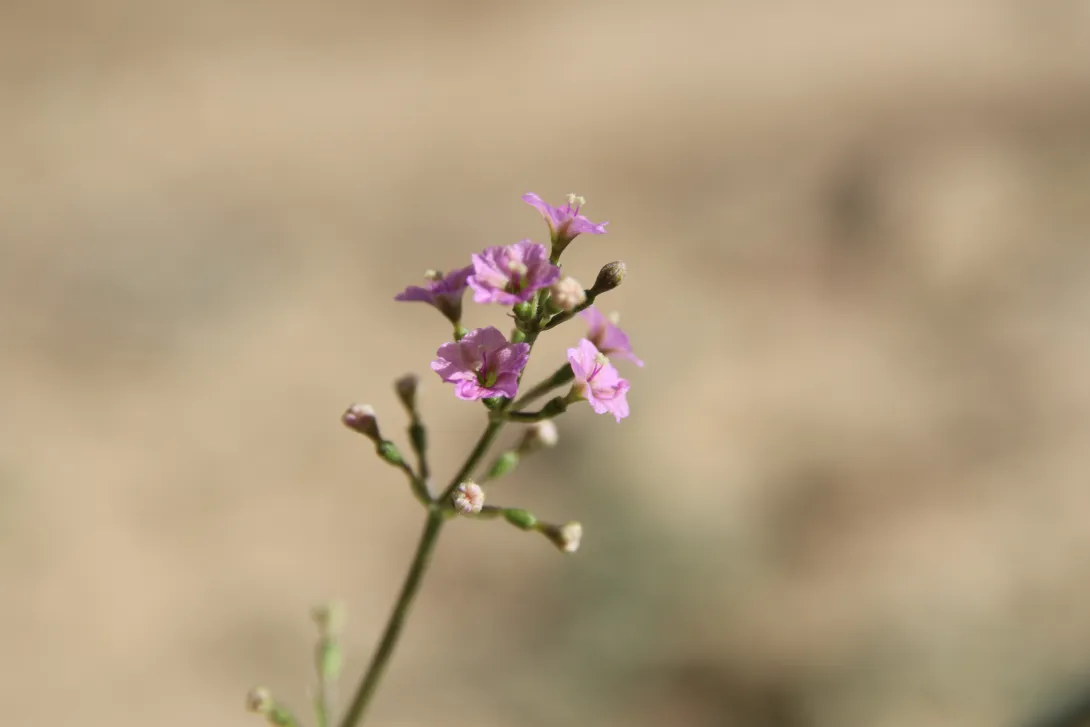
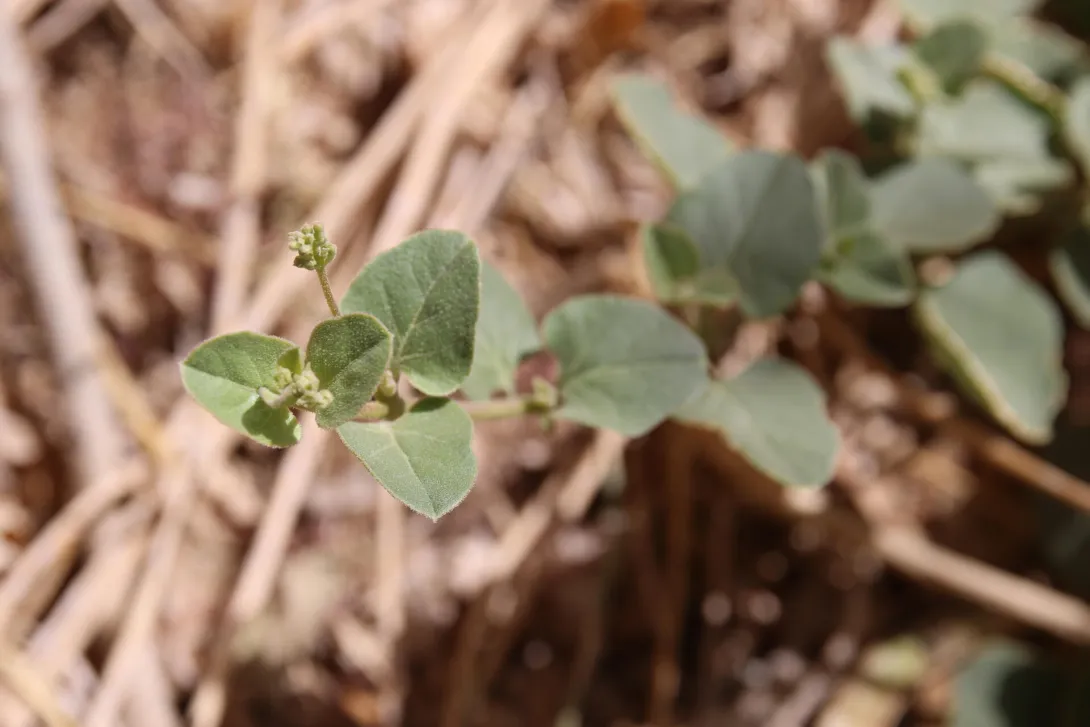
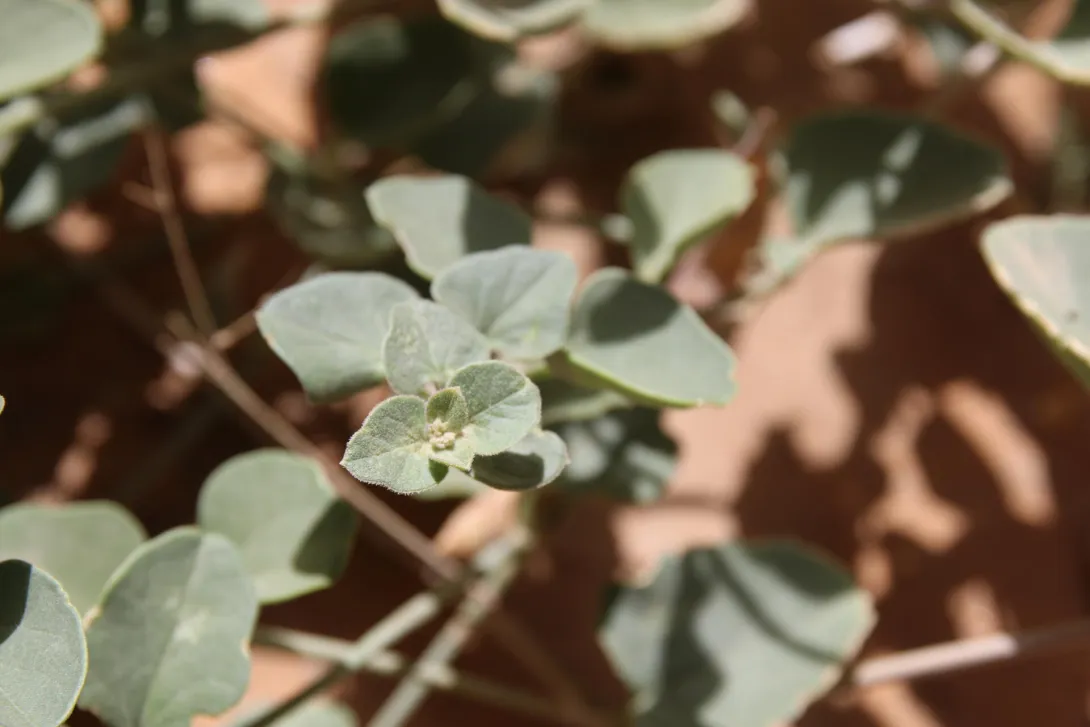
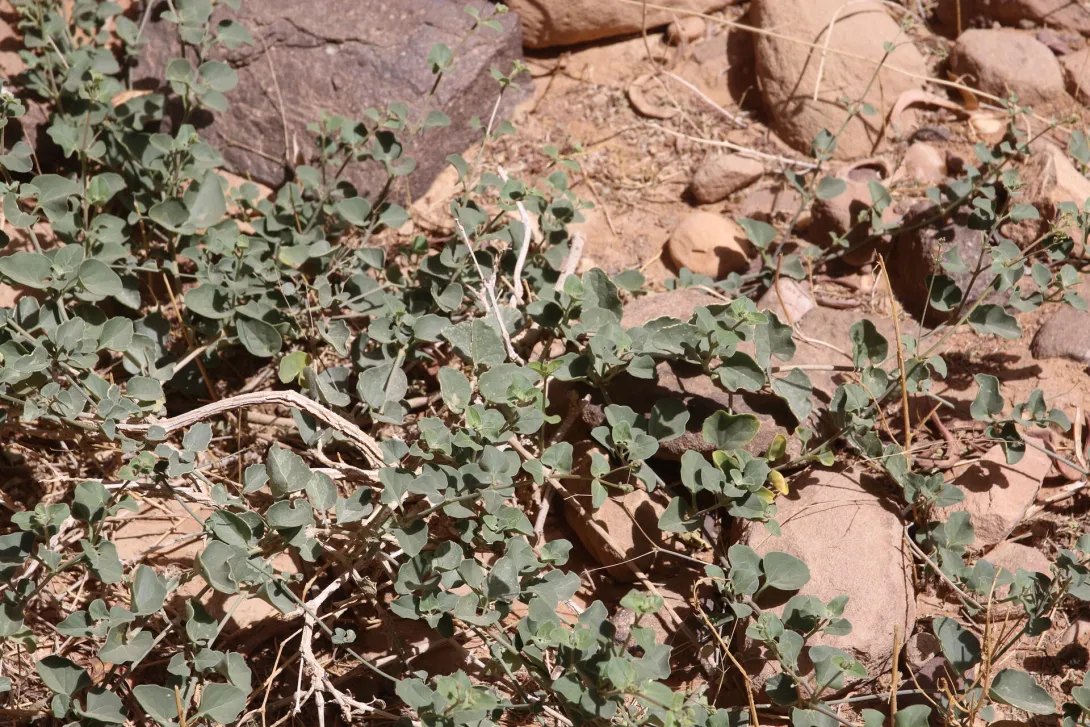
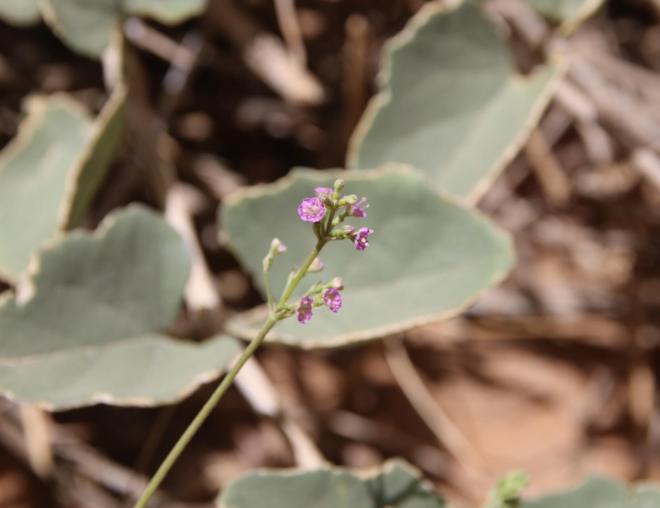
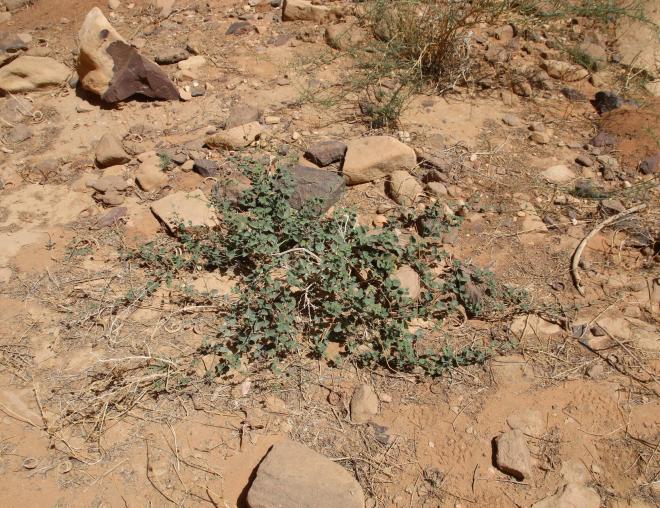
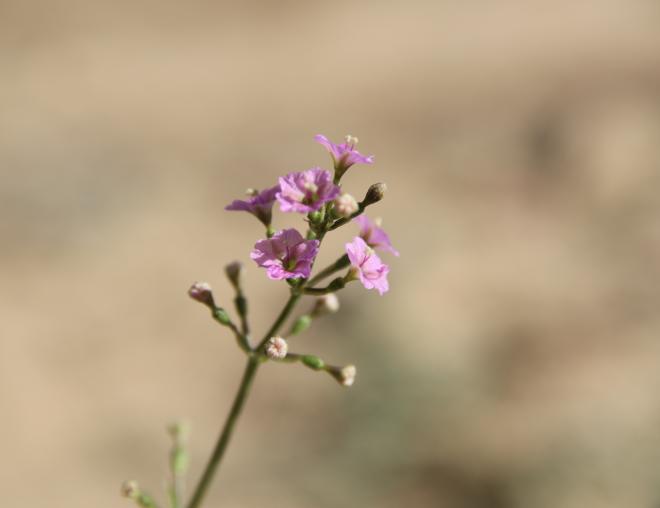
Perennial herb. Branches glabrous green to puberulous. Leaves petiolate, fleshy, lamina ovate to suborbicular, up to 6 x 6 cm, entire, sinuate or sinuately lobed, mostly obtuse. Flowers usually pink, small, sessile to short-pedicellate, arranged in whorls. Perianth 1.5-2.5 mm long, widely infundibuliform with the basal tube almost inconspicious. Stamens 2. Anthocarps nodding at maturity, 5-7 mm long, 10 ribs; the warty glands forming an apical whorl of stalked glands.
- Growth Form
-
Description
-
Habitat and Distribution
- Habitat
-
Geographical Distribution Range
This Sudanian is distributed across Africa, Middle East and Indian subcontinent. Within the Arabian Peninsula, it is native to Jordan, Saudi Arabia, Gulf States, Oman, Yemen, and Socotra.
-
Ecology
-
Phenology
JanFebMarAprMayJunJulAugSepOctNovDecFloweringFructification
- Origin
-
IUCN Red List Category
 Not Evaluated
-
Phenology
-
Uses and Values
-
Other Usages
Palatable
-
Description of Traditional Uses
Used primarily as a forage plant for livestock, particularly camels and goats, in arid regions. It is considered a reliable source of green fodder in desert ecosystems.
-
Other Usages
Gallery